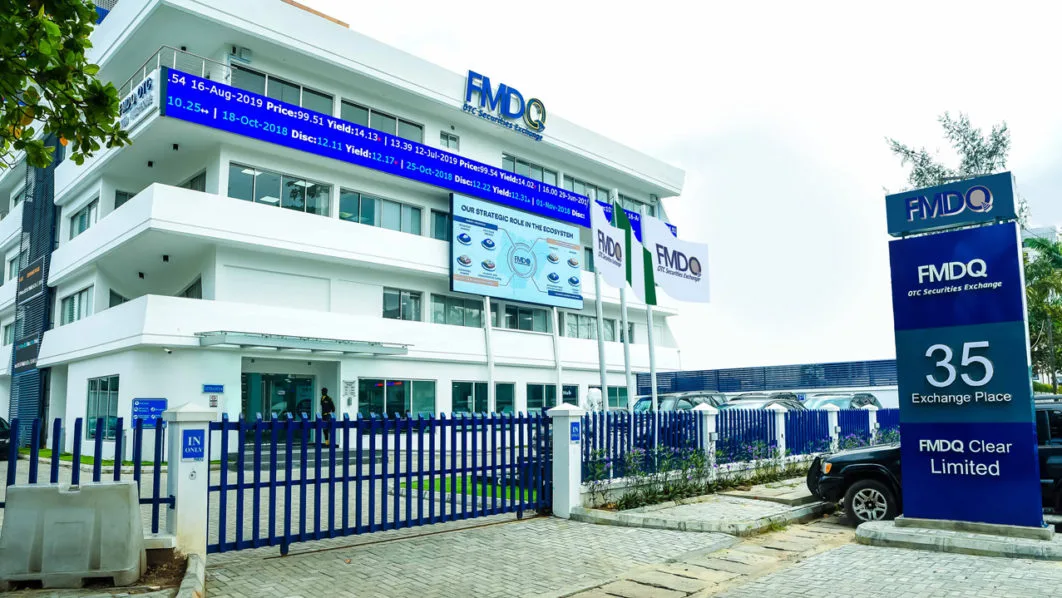



The Central Bank of Nigeria’s (CBN) 15.4% stake in FMDQ-OTC Securities Exchange is now carried at ₦17.75 billion on a consolidated basis, up 23.9% from ₦14.33 billion a year earlier, according to data from the Central Bank of Nigeria Annual Report 2025.
Grossed up to a full ownership basis, that implies the entire FMDQ Group was worth roughly ₦115.3 billion in book terms at the end of 2025, up from an implied ₦93.1 billion in 2024.
For FY2024, FMDQ Group grew revenue 49.9% to ₦51.41 billion and profit before tax 65.5% to ₦23.23 billion, powered largely by treasury income that jumped to ₦16.2 billion from ₦3.2 billion the prior year.
NGX Now Larger Than FMDQ
The Nigeria Exchange Group (NGX) a listed entity had a valuation of ₦137.49 billion at the end of 2025, making it now bigger than the FMDQ.
The NGX had a market capitalization of N70.7 billion compared to N93 billion for the FMDQ (at the end of 2024), making the NGX worth about 76% of the FMDQ then.
As at Friday August 07, 2026, the NGX was worth ₦356 billion, after rallying by 171.6% over the past 1-year.
NGX delivered a resilient audited full-year 2025 performance, defined by a successful transition from “borrowed growth” to operational efficiency.
Despite a massive swing in foreign exchange outcomes due to the Naira’s appreciation, the Group reported a 5.6% rise in Net Profit to ₦10.5 billion.
CBN Gets ₦801 as FMDQ Dividends
At its 13th AGM in July 2025, FMDQ Group declared its first-ever cash dividend — ₦0.20 per share, totalling ₦5.20 billion — having previously rewarded shareholders only with scrip (bonus-share) issues since 2019.
Applying CBN’s 15.4%–15.41% stake to that payout implies the central bank received roughly ₦800–₦801 million in cash from FMDQ during 2025 — a figure CBN does not disclose separately.
That’s because CBN’s summary financial statements report dividend income in a single aggregate line (Note 7), covering every equity holding at once.
An estimated ₦800 million from FMDQ would be roughly 1% of the Group’s total dividend income for the year — a rounding error next to larger equity holdings such as Bank of Industry, Africa Finance Corporation and Afrexim Bank, which sit inside the same aggregate line without individual disclosure.
 Follow the MoneyCentral Nigeria channel on WhatsApp: Click here!