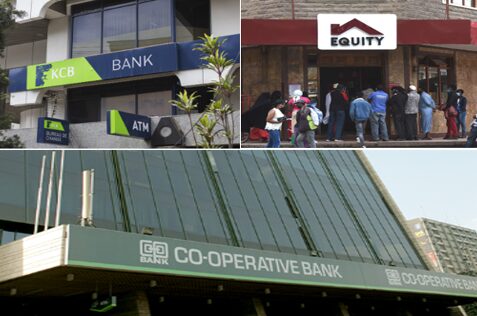



Moody’s Ratings has downgraded to Caa1, from B3, the long-term deposit ratings of three Kenyan banks: KCB Bank Kenya Limited (KCB Bank), Equity Bank Kenya Limited, and Co-operative Bank of Kenya Limited (Co-op Bank).
Moody’s also downgraded the Baseline Credit Assessments (BCAs) of the three banks to caa1, from b3. The outlook on the banks’ long-term deposit ratings and issuer ratings, where applicable, remains negative.
The rating action follows the weakening of the Kenyan government’s credit profile, as captured by Moody’s downgrade of the sovereign rating to Caa1, from B3, on 8 July 2024.
“The banks’ high sovereign exposure, mainly in the form of government debt securities held as part of their liquid assets, renders the banks’ capital, profitability and liquidity vulnerable to a sovereign stress event. In view of these links between sovereign and bank credit risk, these banks’ standalone credit profiles and deposit ratings are constrained by the Caa1 rating of the government,” Moody’s said.
Kenyan banks also face challenges in the operating environment that lead to elevated asset risks.
Specifically, Kenyan households and corporates continue to be affected by high lending rates and tight monetary conditions, at a time that the sovereign is facing fiscal constraints, leading to tax hikes in the past couple of years, cutbacks in spending, and government recurring delays in paying contractors.
KCB Bank Kenya Limited has high exposures to the sovereign through its holding of government securities standing at around 2.5x its tangible common equity, as of March 2024.
KCB Bank’s problem loans to gross loans was high at 18.9% as of March 2024.
Equity Bank has high exposures to the sovereign through its holding of government securities standing at around 2.4x its tangible common equity, as of March 2024.
Equity Bank’s ratings reflected the tough operating environment and the recent weakening in the bank’s asset quality, with problem loans at 14% of gross loans by March 2024, according to Moody’s.
Co-op Bank has high exposures to the sovereign through its holding of government securities standing at around 1.6x its tangible common equity, as of March 2024.
Co-op Bank’s ratings continue to incorporate high asset risks reflecting the tough operating environment and high problem loans at 14.5% of gross loans by March 2024.
Moody’s notes that the banks’ high capital and profitability metrics, deposit-based funding profiles and high liquidity levels, act as buffers against these asset risks.
 Follow the MoneyCentral Nigeria channel on WhatsApp: Click here!