


The global artificial intelligence (AI) race has officially evolved into a high-density energy play, creating an unexpected structural alliance in Nigeria, West Africa.
As hyperscale technology conglomerates face severe power grid limitations in the United States and Europe, Nigeria’s 200 trillion cubic feet of proven natural gas reserves are transitioning from an underutilized domestic asset into a vital infrastructure anchor for the global digital economy.
With artificial intelligence workloads demanding massive, uninterrupted baseload power that renewable systems alone cannot consistently guarantee in emerging markets, tech giants are beginning to think like energy developers.
This paradigm shift is giving rise to privately financed, off-grid gas-to-power corridors across Nigeria, fundamentally altering how midstream gas assets are monetized.
AI’s energy constraint
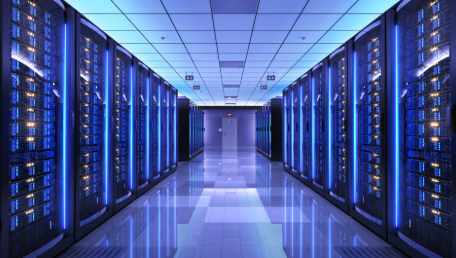
The economics are straightforward: without reliable electricity, AI infrastructure cannot scale. AI-focused data centers operate at significantly higher rack densities than traditional cloud infrastructure and consume vastly more electricity due to GPU-intensive computing.
In March 2026, Google announced plans to commit 2.7 GW of power capacity for a major AI-related data center project in the U.S.—roughly equivalent to the electricity demand of two million homes.
That shift is forcing technology firms to think like energy companies. Last month, Microsoft, Chevron and Engine No. 1 signed an exclusivity agreement to build 2.5 GW of gas-fired generation in West Texas to support Microsoft’s AI expansion. Across the United States and Europe, tech firms are now signing long-term power agreements, financing dedicated generation assets and partnering directly with energy companies to secure reliable supply.
Nigeria’s opportunity
Nigeria offers a compelling solution. The country holds more than 200 trillion cubic feet of proven natural gas reserves—the largest in Africa—yet remains underpowered and digitally underserved. At the same time, Nigeria’s digital economy is expanding rapidly, fueled by a population expected to exceed 400 million by 2050, rising internet penetration and accelerating cloud adoption.
“No one questions Microsoft’s balance sheet. That changes the financing equation for Nigerian gas,” said NJ Ayuk, Executive Chairman of the African Energy Chamber. “For the first time, African gas projects can potentially be underwritten by companies whose energy demand is as large and as strategic as entire industrial sectors.”
Data center gap
The missing piece is infrastructure. Africa currently accounts for just 0.6% of global data center capacity despite representing nearly 20% of the world’s population. Nigeria is attempting to close that gap. Industry estimates show the country had 21 operational data centers by early 2026, with nearly $1 billion in new AI-ready facilities under development.
Critically, many of these projects are converging around gas-powered infrastructure. In March 2026, Tetracore Energy Group announced plans for a $400 million, 20 MW gas-powered data center in Ogun State in partnership with Huawei and Inspirive Technologies. The facility will be supported by a dedicated 100 MW on-site gas-fired power plant—a model increasingly viewed as necessary in markets where grid reliability remains inconsistent.
Financing transformation
Historically, financing domestic gas infrastructure in Nigeria has been difficult due to concerns around payment security, offtake risk and inconsistent industrial demand. Hyperscale technology firms change that equation. Long-term gas supply agreements backed by investment-grade global companies could provide the predictable revenue streams needed to unlock financing for pipelines, processing facilities and embedded generation projects.
Instead of waiting for nationwide grid reform, Nigeria could see the emergence of privately financed gas-to-power corridors anchored by data centers, industrial parks and cloud infrastructure campuses.
Beyond energy
Large-scale hyperscale investment would accelerate fiber deployment, strengthen cloud sovereignty, support fintech expansion and reduce reliance on overseas data hosting. It could also position Nigeria as West Africa’s primary AI and digital infrastructure hub at a time when global technology firms are searching for new growth markets.
 Follow the MoneyCentral Nigeria channel on WhatsApp: Click here!