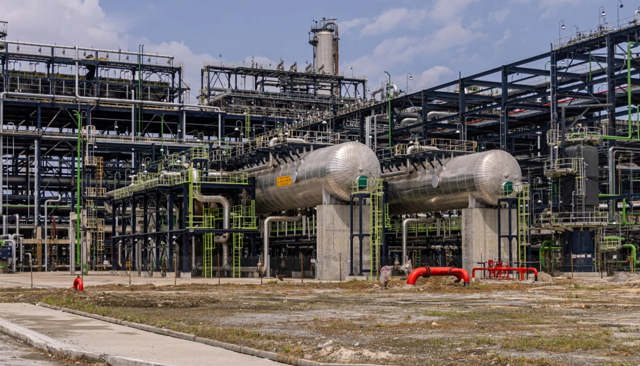



The African refining landscape is undergoing a massive structural shift, led by Nigeria’s Dangote Refinery, which achieved a staggering 94% capacity utilization in March 2026.
According to the latest “State of the Downstream Sector” report by the NMDPRA, the facility has effectively produced enough gasoline to cover Nigeria’s total domestic demand, though a strategic pivot toward global exports has kept the local market tight.
Beyond Nigeria, a wave of upgrades and greenfield projects across the continent aims to eliminate Africa’s 86 million tonne annual fuel supply gap by 2030.
Dangote’s Dominance: The March Data Breakout
The 650,000 bpd Lekki plant has officially moved from “startup” to “industrial powerhouse,” securing the financial and operational footing to dominate the Atlantic basin.
| Metric | March 2026 Performance | Strategic Implications |
| Utilization Rate | 94% | Near-maximum efficiency for a single-site plant. |
| Gasoline Output | 48.2 Million Liters/Day | Equivalent to ~303,000 b/d of petrol. |
| Domestic Coverage | 100%+ | Theoretically meets all of Nigeria’s daily needs. |
| New Financing | $4 Billion Loan | Secured for expansion and crude feedstock buffer. |
Source: MoneyCentral, NMDPRA, Dangote Refinery
-
The Export Pivot: While production hit record highs, the NMDPRA noted that supplies to the local Nigerian market actually fell. The refinery is increasingly prioritizing international exports to earn hard currency, capitalizing on the global supply crunch caused by the Iran–War energy shocks.
-
Capital Injection: Dangote Petroleum Refinery announced a landmark $4 billion financing agreement to accelerate its expansion into the fuel and petrochemical sectors. The new $4 billion loan is a critical “war chest,” allowing the group to bypass NNPC supply delays by purchasing more foreign crude and funding the expansion toward its 1.4 million bpd ultimate goal.
Pan-African Push: Upgrades and New Frontiers
Following the blueprint discussed at the AFC Infrastructure Summit in Nairobi, African nations are racing to reduce their “import dependency” before 2030.
-
East African Hub (Tanzania/Kenya): Spurred by Dangote’s recent vow to build a 650,000 bpd “twin” refinery in Tanga, the region is fast-tracking pipeline and port upgrades to handle regional crude from Uganda and the DRC.
-
Ghana (Tema Expansion): Ghana is seeking private capital to upgrade the Tema Oil Refinery (TOR) to increase its processing capacity and petrochemical integration.
-
Angola (Cabinda & Soyo): Angola is nearing completion of the Cabinda Refinery, part of its strategy to stop exporting 100% of its crude only to buy back expensive refined products.
-
South Africa: Following the 2024-2025 energy crisis, Pretoria is pushing for the reopening and modernization of the SAPREF refinery to stabilize domestic pump prices.
The 2030 Outlook: Integrated Industrialization
The “New Africa” strategy treats refineries not just as fuel plants, but as the heart of an industrial ecosystem.
-
Petrochemicals: Every major new refinery planned for 2030 includes a Polypropylene and Linear Alkylbenzene (LAB) unit to support local manufacturing (packaging, detergents, textiles).
-
Fertilizer Linkage: By-products like sulfur and ammonia are being funneled into plants like Dangote Fertiliser to insulate the continent from global food-security shocks.
 Follow the MoneyCentral Nigeria channel on WhatsApp: Click here!