
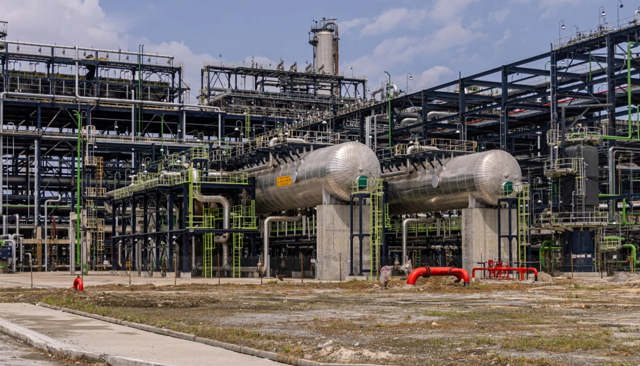



Exports of refined petroleum products from the Dangote Petroleum Refinery to the Offshore Lome ship-to-ship (STS) market have reached a six-month high.
This surge comes as geopolitical tensions—specifically the ongoing US-Iran conflict and broader instability in the Middle East—drive unusual seasonal premiums and tighten global supply chains.
Data from S&P Global Commodities at Sea and regional shipping trackers show a steady ramp-up in volumes landing at the Lome hub, a critical regional redistribution point for West African fuel markets.
Some 83,600 metric tons of gasoline landed in the Offshore Lome market from Dangote in April, up from 65,800 mt in March and a six-month high for that route, data from S&P Global Commodities at Sea showed.
Market Dynamics: Spiking Premiums and Geopolitical Shocks
The ramp-up in Dangote’s exports coincides with significant volatility in the West African (WAF) gasoline and gasoil markets.
-
Middle East War Impact: Attacks on energy infrastructure and the partial closure of the Strait of Hormuz have triggered what analysts describe as a record oil supply shock. As of late April 2026, Brent crude prices remain over 50% higher than at the start of the year.
-
Premium Inversion: WAF gasoline is trading at an unusual seasonal premium. Gasoil (diesel) premiums have risen even more sharply than gasoline, driven by disruptions in long-haul supply routes from the Persian Gulf.
-
Shift in Sourcing: With traditional Middle Eastern supply routes compromised, regional buyers are increasingly turning to the Lagos-based refinery as a dependable, shorter-haul alternative.
Domestic vs. International Pricing Strategy
Despite the export surge, the refinery is navigating a delicate balance with the domestic Nigerian market.
-
Price Adjustment: On May 6, 2026, reports emerged that the refinery adjusted its domestic ex-depot petrol price to ₦1,350 per litre (up from ₦1,275), citing the rising cost of crude feedstock and global market volatility.
-
Stability Commitment: Management continues to emphasize that despite these adjustments, they are working to maintain lower pricing structures compared to imported alternatives to help cushion the domestic economy against the ongoing energy shock.
 Follow the MoneyCentral Nigeria channel on WhatsApp: Click here!
 market have reached a six-month high.)