



…NNPC Eyes Two Major FIDs as Nigeria Chases 2m bpd Goal
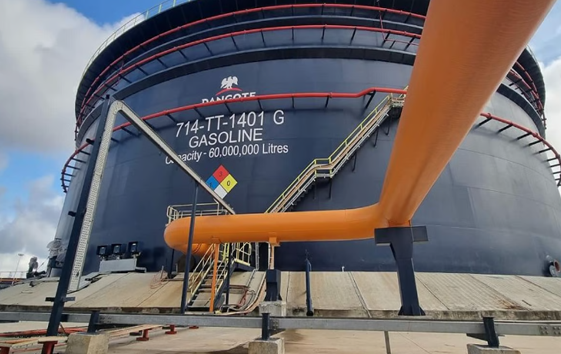
While the Dangote Petroleum Refinery has reached its full 650,000 barrels per day (bpd) capacity, it is facing a severe feedstock crisis.
The refinery’s CEO, David Bird, revealed on March 25, 2026, that the facility is receiving only five monthly cargoes out of the 13 to 15 promised under the federal government’s Crude-for-Naira arrangement.
This 70% supply shortfall is forcing the refinery to buy the same Nigerian crude grades on the international market in US Dollars, often at “war premiums” exceeding $18 per barrel due to the ongoing Middle East conflict.
The Crude-for-Naira Disconnect
The “Crude-for-Naira” policy was designed to stabilize the Naira by removing FX pressure from crude purchases. However, Bird clarified that the program is not a subsidy; the refinery pays full international benchmark prices.
| Metric | Agreed Monthly Target | Actual Delivery (March 2026) | Shortfall |
| Crude Cargoes | 13 – 15 Cargoes | 5 Cargoes | ~70% |
| Supply Source | Domestic Allocation | International Market (Repurchase) | Increased USD Drain |
| Pricing | International Benchmark | Benchmark + $18/bbl Premium | Higher Input Costs |
-
The Repurchase Paradox: Bird described a “troubling” trend where Nigerian crude grades denied to the refinery are sold to international traders. Dangote is then forced to buy that same crude back from the global market, leaking significant value to foreign intermediaries.
-
Quality Issues: Beyond volume, the refinery is struggling with “quality allocation,” receiving grades that are not optimized for its hardware, further reducing operational efficiency.
Cost Pressures: The “War Premium” and Logistics
The supply gap is compounded by the U.S.-Israel-Iran war, which has driven up every secondary cost input for the refinery:
-
Freight & Insurance: Shipping costs have skyrocketed as the Strait of Hormuz remains disrupted. Even for domestic coastal moves, insurance rates have spiked.
-
Feedstock Mix: To sustain full capacity, 30% to 40% of the refinery’s feedstock is now sourced from foreign markets (including the US and Brazil), exposing the plant to extreme global price volatility.
-
Pump Price Impact: Bird warned that while the refinery aims for stability, these rising input costs inevitably pressure the final price of petrol at the pump.
Upstream Hope: NNPC Eyes Two “Big” FIDs
Amidst the refinery’s complaints, the Nigerian National Petroleum Company (NNPC) Limited offered a more optimistic outlook at CeraWeek 2026 in Houston. Executive VP Udobong Ntia disclosed that two major upstream projects are nearing Final Investment Decisions (FIDs).
-
Timeline: One major FID is expected before the end of 2025/early 2026, with another shortly after.
-
The “PIA” Effect: Ntia credited the Petroleum Industry Act (PIA) for restoring investor confidence, noting that projects previously “forgotten” (like Bonga North and Ubeta) are now under construction.
-
Technology Pivot: NNPC is looking to AI and Machine Learning to unlock value in the mature Niger Delta basin, using decades of production data to optimize aging wells.
 Follow the MoneyCentral Nigeria channel on WhatsApp: Click here!
 capacity, it is facing a severe feedstock crisis)