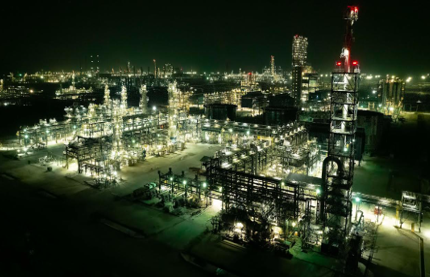



Nigeria’s Dangote Industries signed a memorandum of understanding with Japan’s Mitsui Chemicals on Aug. 20 for joint petrochemical production in Nigeria, according to a news release issued by Mitsui Chemicals on Aug. 21.
Mitsui Chemicals will transfer technology for resins and fertilizers to the planned joint venture, which will utilize feedstock from Dangote’s Lagos refinery with a capacity of 650,000 b/d.
The partnership allows Dangote to enter the petrochemical sector using its own refinery’s raw materials, while Mitsui will leverage experience from its resin and PET production joint venture with Siam Cement Group in Thailand.
“We will jointly explore concrete possibilities to contribute to strengthening the living foundations and developing regional industries in African countries, including Nigeria,” Mitsui Chemicals said in a statement.
The MOU was signed during the Tokyo International Conference on African Development in Yokohama, with consulting firm AAIC Holdings facilitating broader Japanese corporate participation in the African petrochemical market.
The deal marks a new push from Dangote to expand its petrochemicals branch as the company has sought to grow its market share in West Africa.
The Dangote refining and petrochemicals complex was formally inaugurated in January 2024, making it the largest on the African continent.
It started up its 900,000 mt/year polypropylene plant in March 2025 and has targeted displacing some 250,000 mt/year of Nigerian imports.
In May, the company signed an exclusive partnership with global distributor Vinmar to market its product outside of Africa. It currently has the capacity to produce 77 grades of polyment from its facilities.
The Dangote refining business has targeted its next wave of expansion, having recently enlisted former Shell executive David Bird as its first CEO and secured a $4 billion loan led by the African Export-Import Bank.
In its next phase of growth, the company has announced plans to grow its oil refining capacity by roughly 8%, and will establish satellite storage hubs in countries like Namibia.
 Follow the MoneyCentral Nigeria channel on WhatsApp: Click here!