


Seplat Energy Plc, is a leading Nigerian independent energy company listed on both the Nigerian Exchange Group and the London Stock Exchange, rapidly expanding through strategic onshore asset acquisitions.
In the first six months through June 2026, its Production averaged 139,509 barrels per day boepd, while Group production averaged 149,070 boepd as it recorded adjusted earnings of N255.50 billion, (N365.75k per share)
Oando PLC, Nigeria’s leading indigenous energy group listed on both the Nigerian Exchange Ltd. and Johannesburg Stock Exchange, centered heavily on domestic crude and natural gas production as well as extensive retail fuel distribution and petroleum product trading across West Africa.
For in the first six months through June 2026, It delivered average production of 42,789 boepd (+16% YoY), it recorded profit after tax (PAT) of N68.60 billion, within guidance, supported by new wells drilled, the restoration of previously shut-in wells and improved uptime.
Seplat and Oando are the two leading oil and gas companies in Africa’s most populous nation who are acquiring strategic assets with a view to magnifying shareholders’ earnings.
Seplat vs. Oando Dividend analysis
Period: FY24-25
In the period of analysis, Seplat Energy increased its dividend from 16.50 cent paid in 2024 to 25 cent paid in 2025, with the following annual increases:
- 2025: 52 percent
- 2024: 10 percent
A consistent dividend payment reflects the strength of the company’s balance sheet, strong underlying cash flow generation and positive earnings outlook.
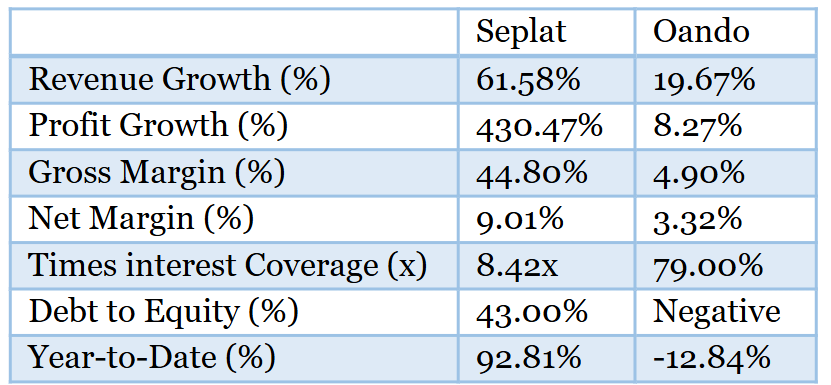
Seplat offers a higher dividend yield of around 2.40-2.56 percent, compared to Oando zero figures as the firm is reeling from accumulated losses.
Seplat generates higher cash flow to support future dividend
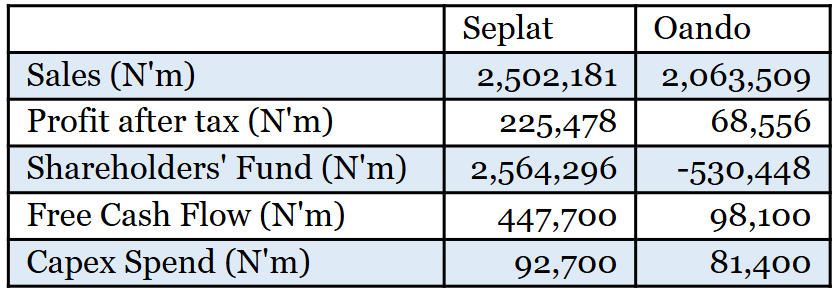
Seplat generated massive cash flow supported by elevated refining margins and the War in the Middle East that underpin crude oil price. The company posted free cash flow of N447.70 billion in the first six months of 2026. The oil and gas is investing in more rigs to drill more oil that will help increase earnings. It has spent N92.70 billion in capital expenditure.
Oando posted free cash flow of N98.10 billion, as the company continues to burn its cash on acquisition instead of prioritizing operational efficiency. Its capital expenditure spending (CapeX Spend) of N81.40 billion is directed to high-impact upstream drilling across OMLs 60–63 and the non-operated portfolio.
Seplat boasts healthier balance sheet than Oando
Without ample cash reserves and low debt, Seplat is poised to weather the macroeconomic headwinds. Of course, aside from the fact that lenders are easily willing to extend credit facilities so that a firm can repay borrowed money, investors also have confidence in Seplat because it uses more equity than external financing to run its business.
On the other hand, Oando is susceptible to bankruptcy risk due to huge debts in its balance sheet. In short, its total liabilities exceeds total assets, which means it is technically insolvent.
Perhaps more worrisome is that the oil and gas firm is aggressively acquiring assets with the cash it should pay down its debt with.
The good news is that it is going to execute an intensive fundraising and balance sheet restructuring programme to optimise its capital structure, strengthen our financial position, improve working capital, enhance financial flexibility and ensure the business is appropriately funded to accelerate growth and maximise long-term shareholder value.
Seplat Vs. Oando
Seplat’s investment has grown by a larger percentage from January 1st of the current year to today than peer rival Oando whose shares have not been rising since the start of the year. This means investors are paying attention to the sector players and their financial performance.
Seplat has a year to date (YTD) return of 92.81 percent that outperforms the NGXASI. That compares with Oando YTD of -12.13 percent.
 Follow the MoneyCentral Nigeria channel on WhatsApp: Click here!