


…as Abuja Drops Off Regional Top Lists Amid Localized Spending Shift
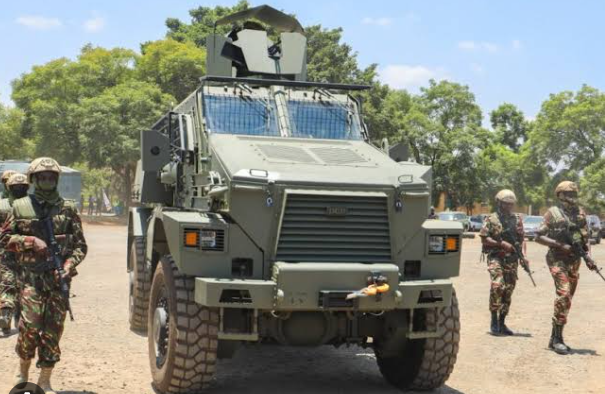
In a major geopolitical shakeup, Kenya has officially become the second-largest importer of major conventional arms on the African continent.
The dynamic, revealed in the latest data release from the Stockholm International Peace Research Institute (SIPRI), marks a historic regional shift, as Nairobi’s defense procurement systematically overtakes long-established military powers like Nigeria, Algeria, South Africa and Ethiopia.
According to the institute, Kenya imported major conventional weapons worth 117 million in Trend-Indicator Value (TIV) last year, representing a massive six-fold surge from the 19 million TIV recorded in the prior fiscal period.
Why Nigeria is Missing From the Top Tier
The absence of Nigeria from Africa’s top defense procurement spots arrives at a crucial moment. Despite waging a continuous, multi-front campaign against bandits, Boko Haram, and Islamic State West Africa Province (ISWAP) fighters, Abuja’s major conventional weapons imports fell to 21 million TIV.
This downward curve is not necessarily a sign of military retreat, but rather a structural shift in tactical operations:
-
The Small Arms Pivot: Nigeria’s current battlefield requirements are heavily dominated by small arms, light infantry transport vehicles, and specialized localized munitions. Because SIPRI’s primary databases strictly track “major conventional arms” (such as combat aircraft, naval vessels, and heavy armored divisions), Abuja’s substantial counter-insurgency spending on smaller, non-conventional equipment bypasses the headline TIV metrics.
-
Domestic Consolidation: The Nigerian military has increasingly prioritized domestic manufacturing and refurbishment, attempting to lower its reliance on direct international imports to preserve foreign exchange.
Understanding the TIV Metric

As security analysts digest the data, SIPRI notes that Kenya’s 516% volume increase does not mean the country spent six times more hard currency on weapons.
The database measures transfers using Trend-Indicator Value (TIV). Rather than tracking volatile commercial prices or foreign exchange translation rates, TIV serves as a standardized index designed to estimate the strategic military significance and operational capability of the transferred hardware.
Consequently, Kenya’s surge reflects a deliberate transition toward highly sophisticated, high-value systems—such as advanced air defense units, precision-guided missile platforms, and airborne surveillance suites.
Kenya’s rapid rearmament is driven by a highly complex regional security matrix. The country shares a porous, volatile border with Somalia, keeping its defense forces in a continuous state of alertness against incursions by the Al-Qaeda-affiliated Al-Shabaab insurgent network.
Beyond border patrol, Kenya’s rising regional profile has translated into expanding multilateral peacekeeping responsibilities, notably anchoring the United Nations-backed Multinational Security Support Mission in Haiti. To support this expanded footprint, Nairobi has relied heavily on deep-security alliances, with roughly 90% of its major arms imports sourced directly from Israel, Italy, and the United States.
Kenya: Security vs. Social Spending
The military expansion comes at a steep fiscal cost. For the upcoming 2026/27 fiscal cycle, the National Treasury has allocated a record KSh252.1 billion ($1.9 billion) for the Ministry of Defence alone.
This heavy prioritization of national security is triggering intense domestic policy debates. With the country facing urgent public demands to upgrade its underfunded healthcare networks, expand primary education systems, and manage its massive external debt profile, every additional shilling allocated to military modernization is a trade-off against domestic human capital development.
While the new hardware will help secure Kenya’s maritime borders and protect critical trade corridors, the government faces the delicate challenge of ensuring that its pursuit of regional security hegemony does not come at the expense of economic stability at home.
 Follow the MoneyCentral Nigeria channel on WhatsApp: Click here!