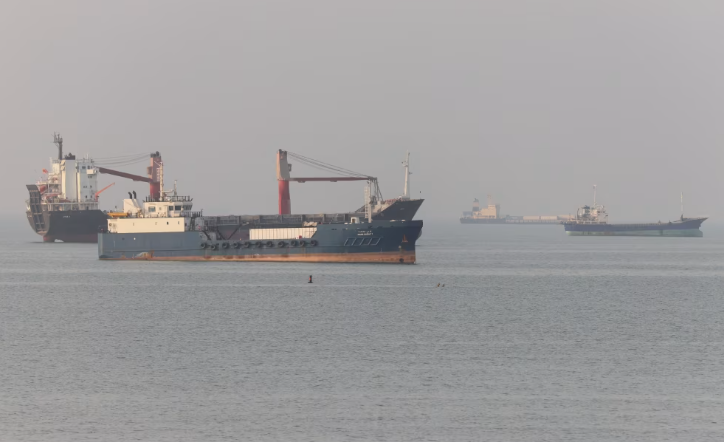



Global energy markets braced for renewed supply disruption on Tuesday after the Trump administration launched extensive airstrikes against Iranian coastal targets and abruptly revoked Tehran’s license to sell oil on the open market, shattering a fragile, weeks-old ceasefire.
The double-barreled military and economic offensive sent Brent Crude surging 5% to trade near $76.00 a barrel, reversing recent downward trends in retail fuel prices that President Trump had previously claimed as a major policy victory.
The localized combat represents the most severe breakdown of the June 17 memorandum of understanding (MoU), which had temporarily reopened the critical Strait of Hormuz chokepoint and unwound a punishing U.S. naval blockade.
According to a senior U.S. official, Tuesday’s targeted bombardments were four to five times larger in scale than any reactive engagements logged since last month’s truce, designed explicitly to establish a severe deterrent against further asymmetrical maritime warfare.
Centcom Flattens Coastal Missile Sites
The Pentagon’s kinetic response followed an early Tuesday assault by the Islamic Revolutionary Guard Corps (IRGC), which fired a volley of anti-ship missiles and explosive drones at commercial vessels traversing the international waterway. U.S. Central Command (Centcom) labeled the IRGC action an “unwarranted, dangerous, and clear violation of the ceasefire.”
Iranian state media reported successive explosions across critical logistical hubs along the Persian Gulf, including Sirik, Qeshm, and the strategic port city of Bandar Abbas.
The Treasury Pulls the Plug on Petrodollars
Simultaneously, the U.S. Treasury Department neutralized the primary financial incentive that brought Tehran to the negotiating table in June. The administration officially rescinded the temporary oil-export waiver granted on June 21, effectively blocking Iran’s ability to legally market its crude or repatriate dollar-denominated revenues into its domestic banking grid. The Treasury has instituted a strict wind-down grace period expiring July 17, 2026, for pre-authorized transactions.
The sudden loss of Iranian barrels comes at a volatile time for global commodities. Hard-currency access was the core carrot used by Western diplomats to entice Iran into a comprehensive 60-day denuclearization protocol. By targeting Iran’s energy revenues, Washington is betting that immediate economic strangulation will force a retreat in the gulf, though macro fund managers warn the move risks inducing an artificial supply squeeze during high-demand summer months.
The Battle for Chokepoint Control
The rapid unravelling of the June compact exposes the fundamental structural flaws of the interim agreement, which left critical operational parameters unaddressed. Most notable among these ambiguities is the long-term jurisdictional control of the Strait of Hormuz—a maritime artery that historically handles roughly 20% of global petroleum consumption.
While U.S. officials maintain that diplomatic channels remain open to forge a final deal, the scale of Tuesday’s military escalation suggests both sides are prepared to risk a wider regional conflict to assert dominance over the waterway. For global macro traders, the re-emergence of geopolitical risk premiums in the gulf means the brief window of sub-$70 crude has probably closed, leaving the market highly vulnerable to further escalation ahead of the July 17 sanctions deadline.
 Follow the MoneyCentral Nigeria channel on WhatsApp: Click here!