



The Central Bank of Nigeria (CBN) has officially concluded its 24-month banking sector recapitalization programme, marking a historic shift in the nation’s financial architecture.
Since the mandate was issued in March 2024, Nigerian banks have successfully raised ₦4.65 trillion in new capital, significantly exceeding initial market expectations and reinforcing the system against domestic and global shocks.
As of April 1, 2026, the CBN confirms that 33 banks have met the new minimum capital thresholds, effectively ending the era of regulatory forbearance and ushering in a period of “super-capitalized” Tier-1 and Tier-2 lenders.
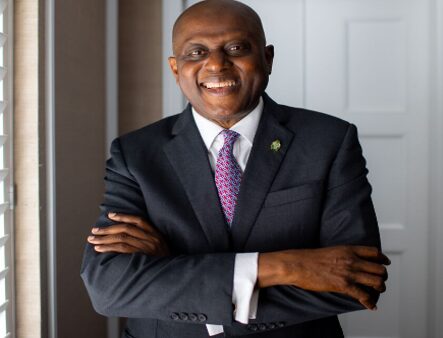
Governor Olayemi Cardoso said:
“The recapitalisation programme has strengthened the capital base of Nigerian banks, reinforcing the resilience of the financial system and ensuring it is well-positioned to support economic growth and withstand domestic and external shocks.”
Capital Composition: A Vote of Global Confidence
The programme’s success was driven by a mix of local resilience and renewed international interest, despite the ongoing Middle East conflict and its impact on emerging market risk.
| Sourcing | Percentage | Value (Approx.) | Market Sentiment |
| Domestic Investors | 72.55% | ₦3.37 Trillion | Strong local liquidity & pension fund participation. |
| International Markets | 27.45% | ₦1.28 Trillion | Rebounding FDI and confidence in the PIA/CBN reforms. |
Source: CBN
Systemic Resilience: Beyond the Basel Benchmarks
Governor Olayemi Cardoso emphasized that the primary goal was “resilience.” The sector now boasts Capital Adequacy Ratios (CAR) that sit comfortably above international standards.
-
CAR Thresholds: Maintained at 10% for regional/national banks and 15% for those with international authorization (like Zenith, GTCO, and Access).
-
Stress Testing: The CBN has introduced a mandatory, risk-based framework requiring banks to conduct regular stress tests against “extreme but plausible” scenarios, including $150 oil and prolonged FX volatility.
-
Asset Quality: The capital injection has allowed banks to write off legacy bad loans and clean up balance sheets, leading to a visible improvement in Non-Performing Loan (NPL) ratios across the industry.
The “33 Club” and Market Consolidation
While 33 banks crossed the finish line, the landscape has been permanently altered through mergers, acquisitions, and a few exits.
-
Operational Continuity: The CBN assured the public that all banks—including those still undergoing “judicial or regulatory processes”—remain fully operational. There have been no disruptions to customer deposits or daily banking services.
-
The “Super-Banks”: Lenders like Zenith Bank (now the largest by market cap at ₦4.56tn) and GTCO are now positioned to finance the “Big Ticket” infrastructure and energy projects previously dominated by foreign syndicates.
-
Governance Overhaul: Alongside the cash, the CBN has tightened prudential guidelines, focusing on board composition and risk management to prevent the “insider lending” traps of previous decades.
Impact on the Real Economy
A stronger capital base is expected to translate directly into increased lending capacity for Nigerian businesses.
-
Lending Power: With ₦4.65 trillion in new “permanent capital,” banks are better equipped to support the 1.84 million bpd oil production target and the manufacturing sector’s transition to alternative energy.
-
Financial Stability: The successful conclusion provides a “green light” to foreign portfolio investors (FPIs), likely supporting the Naira’s recent resilience amid the Iran war.
 Follow the MoneyCentral Nigeria channel on WhatsApp: Click here!
 has officially concluded its 24-month banking sector recapitalization programme, marking a historic shift)