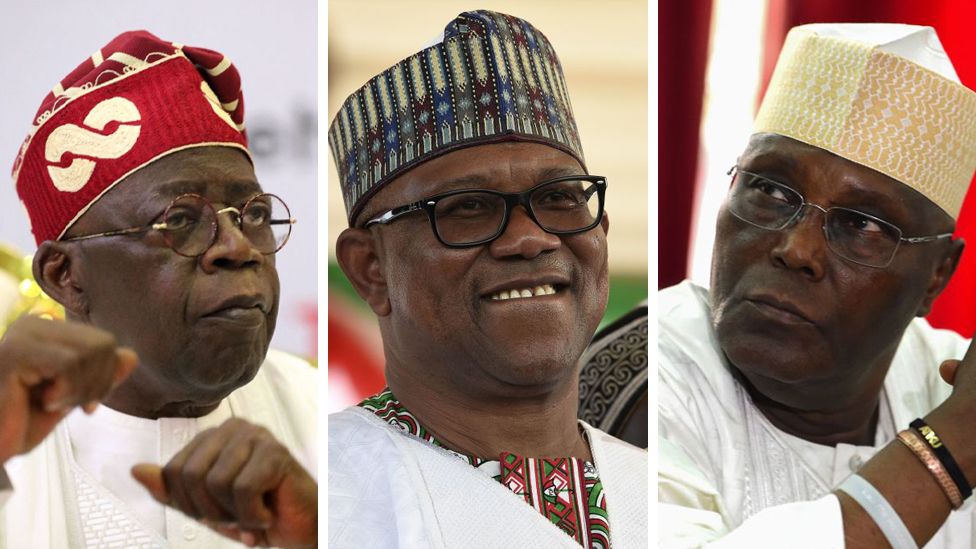



Campaigning for Nigeria’s January election is officially underway, with voters in Africa’s largest democracy offered the same slate of candidates as three years ago — and many of the same challenges.
President Bola Tinubu is widely tipped to win a second term, despite public anger over the high cost of living on his watch. He’ll again face Peter Obi of the Nigeria Democratic Congress and former Vice President Atiku Abubakar of the African Democratic Congress.
The 2023 election was the tightest since the West African oil giant returned to multiparty rule at the turn of the century, with Tinubu scraping over the line in a three-way race. Abubakar’s bid to avoid a replay by unifying the opposition collapsed several months ago, boosting the president’s chances.
“The election result may not be done deal, but President Tinubu is in pole position,” said Matthew Page, associate fellow at Chatham House, a London-based think-tank.
Tinubu, he said, has strengthened the ruling party’s hold over every level of government and kept its vast patronage networks well-lubricated, which “suggests that Tinubu and his party will triumph in a low-turnout election, just like they did in 2023.”
The issues likely to sway voters boil down to three key themes: insecurity, electricity and the high cost of living.
Tinubu ended costly fuel subsidies, overhauled the tax code and ended the naira’s fixed peg against the dollar. That improved public finances and lifted investor confidence. But it also triggered surging inflation that hammered ordinary Nigerians.
Abubakar has previously campaigned on selling state assets like Nigeria’s moribund refineries, restructuring the country to ensure greater independence for its states, and whittling down government involvement in running the economy.
The energy of the so-called Obidient Movement may have waned, but Obi’s campaign is likely to be boosted by his running mate Rabiu Kwankwaso, a popular politician from Kano state. Kwankwaso polled 1.5 million votes in 2023 and may aid Obi’s lack of support in vote-heavy northern Nigeria.
Obi has previously spoken about boosting production, cutting waste in governance and rooting out endemic graft.
 Follow the MoneyCentral Nigeria channel on WhatsApp: Click here!