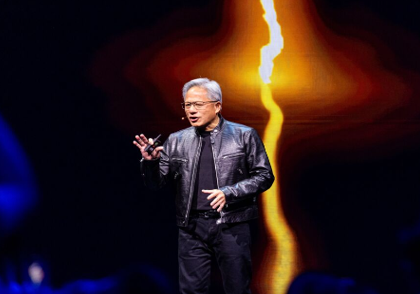



Beijing dismissed allegations that it spied on Nvidia Corp. Chief Executive Officer (CEO) Jensen Huang, an episode that is spiraling a little over a week before a meeting between Chinese leader Xi Jinping and US President Donald Trump.
“The so-called Chinese spy allegation is unsubstantiated,” Foreign Ministry spokesman Guo Jiakun said at a regular press briefing in Beijing.
Guo repeated a stance China first took on Oct. 30 after the New York Times reported that US spies apparently found that a Chinese businesswoman who had a relationship with Huang was passing intelligence to Beijing.
“It is nothing but smears against China,” Guo added at the briefing on Monday.
The episode could complicate the Xi-Trump summit set for next week at an Asia-Pacific Economic Cooperation gathering in the southern Chinese city Shenzhen.
Huang has admitted an affair after a series of reports identified a woman linked to him as a suspected Chinese spy. Last week, key House Republicans requested a briefing with Huang to discuss his dealings with Alice Huang, also known as Huang Le.
To investigate the case, the Nvidia board is assembling a committee of independent directors who will work with outside counsel, according to a statement Sunday.
The probe follows a series of reports that Nvidia’s leader was targeted by Alice Huang, a former executive at Megaspeed International. Megaspeed, based in Singapore, has been accused of breaking US export restrictions and smuggling Nvidia chips to China.
Trump defended Huang, calling him a “fine person” and saying he should remain CEO.
On Monday, the state-run Global Times newspaper denied Beijing had any link to Huang’s affair, accusing US media of spreading a false narrative and warning the issue could hurt ties. It said said outlets, the New York Times in particular, were “going crazy” with speculative stories.
“All it took were a few photographs showing Asian faces and Nvidia’s previous efforts to push for relaxing trade curbs on China,” the commentary said. “This is precisely how American media, which have long styled themselves as ‘objective,’ manufacture stories.”
“Whenever China-US relations begin to improve, someone often fires a cold shot from behind,” the newspaper said, claiming there were likely behind-the-scenes efforts to “stir up confrontation,” without providing any evidence.
It warned that an “anti-China script” would disrupt normal tech and trade exchanges, and damage the interests of both sides.
 Follow the MoneyCentral Nigeria channel on WhatsApp: Click here!