
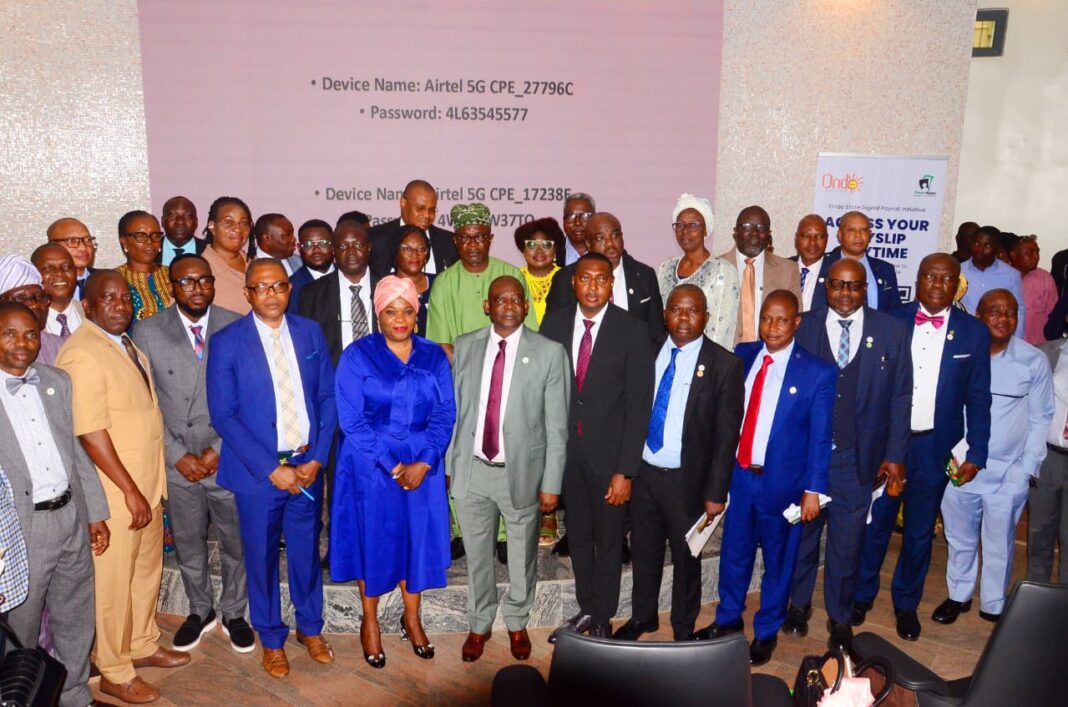



The Ondo State Government has launched a digital Human Resource (HR) Management System and an automated pension migration platform for retiring workers to enhance efficiency, transparency and service delivery.
The state Head of Service (HoS), Mr Segun Odusanya, at the launch on Wednesday in Akure, described the initiative as a major step towards transforming the management of the workforce.
According to Odusanya, the initiative is designed to reduce errors associated with manual processes in salary and pension administration, strengthen personnel data management, and improve workers’ access to relevant information and services.
“The increasing complexity of government operations has made it necessary to move from largely manual personnel administration to a digital system capable of providing timely, accurate and accessible information.
“A digital HR platform will eliminate administrative bottlenecks, improve the processing and tracking of personnel records and support effective workforce planning.
“It will provide government with better visibility of workers’ deployment, professional competencies and career progression, while helping to identify areas requiring capacity development.
“The platform will also establish a centralised repository of verifiable personnel data, ensure that administrative decisions are based on accurate and up-to-date information.
“With this initiative, civil service processes will become more efficient, accountable and transparent,” he said.
The HOS urged civil servants across all cadres to embrace the digital transition, stressing that its success would require cooperation, patience and willingness to acquire new skills.
Odusanya also charged permanent secretaries, directors and personnel officers to provide the necessary leadership for effective implementation and continuous improvement of the system.
Also, Mr Geoffrey Dashe, Head of Sales, SmartApps IT Ltd, the technical partner of the initiative, said the platform would provide workers with quick access to payroll information, including monthly wage bills and salary comparisons.
Dashe said salaries could be processed within a day once funds were available.
He added that the integration of payroll with Bank Verification Numbers (BVN) and biometric verification through facial recognition and fingerprints would help ensure that the right employee received the right salary.
According to him, the digital transformation has also introduced an automated pension migration application for transit of retiring workers transit from active service to their pension with reduced reliance on manual documentation.
“The digital platform will enable civil servants access their payslips and employment information from their homes, thereby reducing queues and unnecessary visits to government offices.
“Role-based access control and data encryption has been incorporated into the system to protect sensitive government information,” he said.
Similarly, the Permanent Secretary, Pension Transition Office, Dr Peter Akingbade, said the digital pension system would restore dignity to pensioners by eliminating unnecessary delays, lost files and repetitive paperwork.
Akingbade said pensioners had previously faced difficulties arising from lost records and prolonged verification processes, noting that digitisation would ensure that relevant records were securely stored and readily accessible.
He assured that the office was committed to ensuring that legitimate pensioners were not left behind in the process.
Meanwhile, the state Accountant-General, Mr Segun Orisabinueni, described the digital payroll system as a welcome development that would give workers greater control over their salary information.

, Mr Segun Odusanya, described the initiative as a major step towards transforming the management of the workforce.)