


The International Monetary Fund (IMF) and African economic leaders have called for urgent reforms, stronger regional trade and improved financial systems to attract private investment and accelerate Africa’s economic growth.
They made the call at a session on Africa’s Golden Future during the ongoing IMF and World Bank Group Annual Meetings in Bangkok, Thailand, on Tuesday.
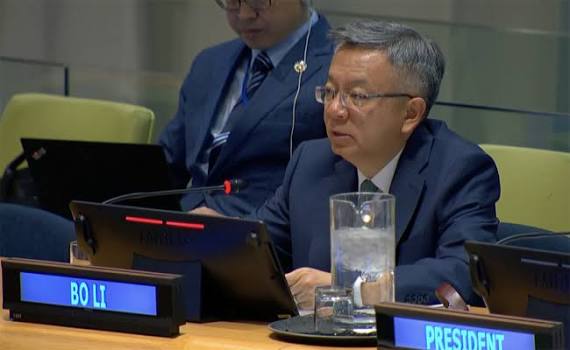
Bo Li, IMF Deputy Managing Director, said Africa had the potential to become the world’s next major growth engine, given its youthful and rapidly expanding workforce, abundant natural resources and growing cities.
However, he said the challenge was turning that potential into lasting gains in living standards.
Li said that at Sub-Saharan Africa’s recent growth rate, income per capita would take about 50 years to double, more than three times the period it took East Asia during its economic take-off.
He attributed the challenge to elevated debt levels, rising borrowing costs and declining development assistance, which made private-sector investment increasingly important to Africa’s growth prospects.
He said attracting investors required more than macroeconomic stability, as businesses also need reliable electricity, efficient regulatory processes, enforceable contracts and a predictable policy environment.
“Addressing these obstacles pays off.”
IMF analysis suggests that closing half the gap with emerging markets in governance, business regulations, and market openness could raise Sub-Saharan Africa’s output by as much as 20 per cent over five to 10 years.”
Li identified governance as particularly important because it created a level playing field and strengthened the credibility and effectiveness of other economic reforms.
He also called for effective implementation of the African Continental Free Trade Area (AfCFTA), saying the agreement offered an opportunity to expand markets, increase production and strengthen regional value chains.
Li said achieving the agreement’s potential would require lower trade barriers, simpler customs procedures, modern payment systems and stronger cross-border infrastructure, particularly reliable and affordable energy.
He highlighted North Africa’s strategic position, industrial capacity, ports and renewable energy potential as assets that could connect Sub-Saharan Africa with Europe and the Middle East.
He stressed that reforms must be carefully sequenced, protect vulnerable populations and be supported by clear communication and broad social consensus to ensure their sustainability.
Li reaffirmed the IMF’s commitment to supporting African countries through policy advice, financing and capacity development to translate the continent’s economic potential into improved living standards.
Daniel Mminele of South Africa’s Nedbank Group Ltd. said macroeconomic stability was the foundation for attracting long-term investment but was insufficient without credible structural reforms and effective implementation.
“Macroeconomic stability is the starting point. That’s the ticket to the game. Without it, there’s no point in talking about long-term investment.”
Mminele said investors assessed whether governments had identified the right reform priorities, possessed the institutional capacity to implement them and could sustain policies beyond changes in administration.
He emphasised that consistency, transparency and honest evaluation of reform outcomes were essential to building investor confidence and reducing perceived risks.
Mminele urged African governments to accelerate implementation of the African Continental Free Trade Area (AfCFTA), citing regulatory fragmentation, costly cross-border payments, foreign exchange constraints and inadequate transport infrastructure as major obstacles to trade.
“The benefits have been identified and articulated very well. We must just get on with it. We must develop a sense of urgency in implementation,” he said.
Ahmed Rostom, Egypt’s Minister of Economy and Planning, said Africa had an estimated four trillion dollars in savings, but only three per cent was channelled into infrastructure financing.
He said the challenge was to mobilise these resources for productive investments, adding that the proposed New African Financial Architecture for Development would help coordinate financial institutions and reduce investment risks.
Rostom also advocated stronger trade integration, improved logistics infrastructure and investment in renewable energy to facilitate commerce across the continent.
The speakers stressed that better governance, integrated markets, accessible finance and sustained implementation of reforms were critical to attracting investment, expanding businesses and creating jobs.
 Follow the MoneyCentral Nigeria channel on WhatsApp: Click here!