
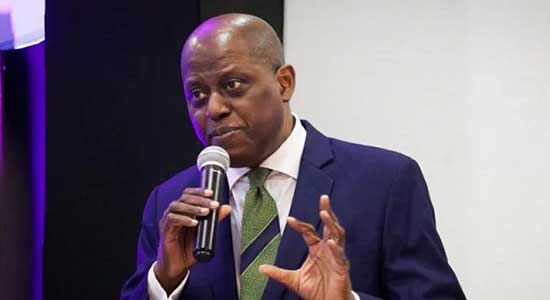



The Monetary Policy Committee (MPC) of the Central Bank of Nigeria (CBN) concluded its 306th meeting on Tuesday, electing unanimously to maintain all key policy parameters.
Despite a slight moderation in headline inflation—which dipped to 15.91% in June—Governor Olayemi Cardoso confirmed that the committee opted for a cautious “wait-and-see” approach. The decision reflects growing concerns over external risks, particularly renewed hostilities in the Middle East and maritime blockades along the Strait of Hormuz, which threaten to push up global energy prices and import costs.
Balancing Domestic Disinflation Against External Shocks
While domestic indicators show steady progress following structural foreign exchange reforms, the apex bank noted that risks to price stability remain balanced on a thin edge.
“The committee’s decision to maintain the current policy stance follows a thorough assessment of the balance of risk,” Governor Cardoso stated at the post-meeting briefing. “Although headline inflation moderated marginally in June 2026, global uncertainties have heightened due mainly to the renewed hostilities in the Middle East. A steady policy stance allows us to monitor incoming data and act if conditions warrant.”
Market Implications for Banking and Corporate Debt
By leaving the Cash Reserve Ratio (CRR) at 45.00% for commercial banks, the central bank continues to restrict excess liquidity in the banking system.
For tier-one lenders like FirstHoldCo, Zenith Bank, and GTCO, the hold maintains high yields on government securities and prime corporate loans, protecting their net interest margins (NIMs).
However, for private-sector borrowers, credit conditions will remain tight, keeping corporate debt issuances focused primarily on high-yield commercial paper and short-term working capital facilities through the second half of the year.
 Follow the MoneyCentral Nigeria channel on WhatsApp: Click here!
 of the CBN concluded its 306th meeting on Tuesday, electing to maintain all key policy parameters)