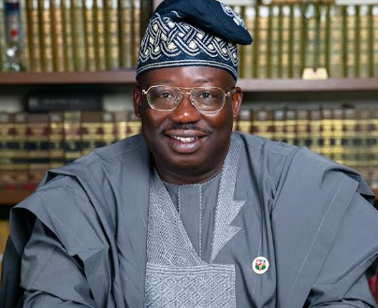



The Chairman of the Alliance for Economic Research and Ethics Ltd/GTE, Dele Oye, has said the ₦17.5 trillion debt owed by the Federal Government to the Nigerian National Petroleum Company Limited (NNPC) is a disguised fuel subsidy, arguing that Nigeria is currently operating the most expensive subsidy programme in its history despite the government’s claimed removal of the subsidy.
Oye, who is the immediate past President of the OPSN, in a statement, said the huge liability, accumulated through what NNPC describes as “energy security expenses,” “under-recovery” and other receivables, represents a continuation of the subsidy regime under a different name.
He argued that the government’s 2023 announcement of fuel subsidy removal did not eliminate the financial burden but merely transformed it into an accounting arrangement that has placed additional pressure on public finances.
He said, “Nigeria is currently executing the most expensive subsidy program in its history, yet almost no one is calling it by its true name. A ₦17.5 trillion liability has been accumulated in the shadows, hidden behind accounting terminologies designed to obscure rather than illuminate.
“This is not energy security; it is fiscal capture, the systematic transfer of public wealth through mechanisms that evade democratic oversight. The Petroleum Industry Act was designed to dismantle such opaque structures, not to be weaponized to legitimize them.
“Three years after the declaration that “subsidy is gone,” the burden has never been heavier. It has merely been rebranded. And that, tragically, is the most expensive word game in Nigerian history.”
According to him, NNPC’s 2024 financial statements showed that the Federation’s obligations to the company had risen to about ₦17.5 trillion, comprising energy security expenses, under-recovery claims and other receivables, noting that the development raises concerns over transparency, accountability and the sustainability of Nigeria’s petroleum policy.
Oye said, “On May 29, 2023, President Bola Ahmed Tinubu stood before the nation and declared, with theatrical finality: “Subsidy is gone.” It was a bold proclamation, one that signaled a definitive break from decades of fiscal hemorrhage. Yet, three years later, as the Nigerian National Petroleum Company Limited (NNPC) released its 2024 Consolidated and Separate Financial Statements, the numbers revealed a profoundly different reality.
“The subsidy did not vanish; it metamorphosed. Today, the Federation owes NNPC a staggering ₦17.5 trillion, an exposure nearly double the ₦9.36 trillion recorded in 2023. The anatomy of this colossal liability is as stark as it is revealing: ₦7.13 trillion categorized as “Energy Security Expense”, ₦8.67 trillion labeled as “Under-Recovery” and ₦8.84 trillion grouped under “Other Receivables from the Federation”.
“NNPC’s auditors, PwC, SIAO, and Muhtari Dangana & Co.—have certified these figures. The company proudly posted a record ₦5.4 trillion profit after tax in 2024, a 64% surge from the previous year. Yet, this “profit” was declared even as the company simultaneously booked nearly ₦18 trillion in debts owed by the very Federation to which it is mandated to remit dividends.
“NNPC insists this is not a subsidy. They call it “energy security.” But as the late economist. Thomas Sowell astutely observed: “It is hard to imagine a more stupid or more dangerous way of making decisions than by putting those decisions in the hands of people who pay no price for being wrong.” In Nigeria’s case, the price is being paid by 220 million citizens, while the decision-makers engage in a deeply expensive exercise in linguistic gymnastics.”
He argued that the current arrangement has created a situation where government revenue is reduced through deductions from NNPC remittances while Nigerians continue to experience high petrol prices.
The Alliance chairman further questioned the continued accumulation of the liability despite the passage of the Petroleum Industry Act (PIA) 2021, which was designed to promote transparency and commercial efficiency in the petroleum sector.
Oye also criticised the continued reliance on petrol imports despite the commissioning of the Dangote Petroleum Refinery, describing it as a contradiction in Nigeria’s quest for energy independence.
“The narrative becomes truly surreal when we consider the Dangote Petroleum Refinery. Commissioned to end Nigeria’s decades-long dependence on imported fuel and save precious foreign exchange, Africa’s largest refinery (with a capacity of 650,000 barrels per day) should have rendered the “energy security expense” entirely obsolete.
Instead, Nigeria finds itself embroiled in a crisis over whether the Dangote Refinery should even be permitted to supply the domestic market effectively,” Oye said.
He called for a comprehensive forensic audit of all energy security expenses and related claims, arguing that Nigerians deserve clarity on the financial obligations being accumulated in their name.
The former NACCIMA chairman also urged the Federal Government to prioritise domestic refining, ensure crude supply to local refineries and establish a more transparent petroleum pricing system.
 Follow the MoneyCentral Nigeria channel on WhatsApp: Click here!