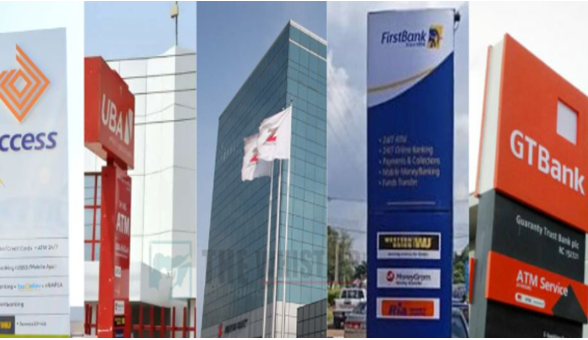



Nigeria’s biggest banks generated an average of N332.74 million revenue per employee as at December 2025 as the smartly proactive ones will be mulling artificial intelligence (AI) to bolster efficiency, according to MoneyCentral calculations.
Access Holdings Plc has reported a figure of N555.09 million, the highest in the industry, highly driven by technology as well as investment and banking arms.
Bank revenue per employee is a vital metric that divides total annual revenue by the total number of staff. It highlights how efficiently a bank utilizes its workforce and technology to generate income. A higher ratio indicates better efficiency.
Why This Metric Matters
- Operational Efficiency: It directly reveals whether a bank is bloated with excessive headcount or successfully leveraging digital banking to do more with less.
- Profitability Indicator: High revenue per employee is usually a strong precursor to higher net income and better overall profit per employee ratios.
Zenith Bank recorded revenue per employee of N477.83 million; Stanbic IBTC Holdings, N336.94 million; Guaranty Trust Holdings (GTCO), N351.25 billion; FirstHolCo Plc, N318.82 million; United Bank for Africa (UBA), N298.54 million; First City Monument Bank (FCMB), N261.32 million, and Sterling Bank, N130.75 billion,
Nigerian banks are investing in artificial intelligence (AI) with a view to reducing costs and maximising profit in an environment where financial technology (Fintech) firms are canibalising their sales.
There has been stiff competition from Fintech firms such as Opay, Moniepoint, and Palmpay and Co who use the latest technology while taking advantage of smartphone penetration to meet the needs of the younger generation.
AI Will help Banks in the Following Ways:
Fraud Detection: Banks utilize AI to analyze millions of daily transactions, instantly flagging anomalies and mitigating fraud-related losses.
Customer Service: AI-powered chatbots and voice assistants provide round-the-clock support, reducing the need for large, expensive traditional call centers.
Credit Scoring: Machine learning models are heavily utilized for digital credit risk assessments, shortening loan processing cycles from days to hours while minimizing default probabilities.
 Follow the MoneyCentral Nigeria channel on WhatsApp: Click here!