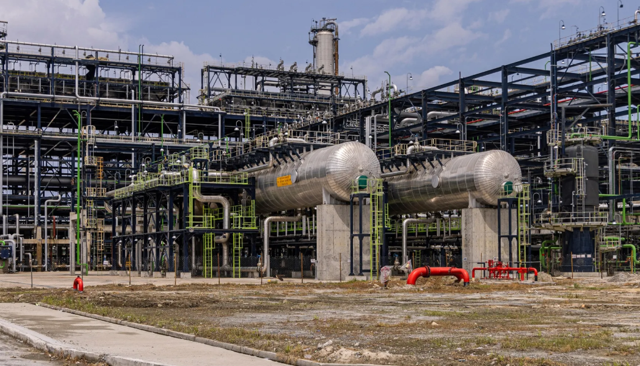



Nigeria’s Dangote Petroleum Refinery has reverted to European-linked international pricing for its coastal and gantry gasoline cargoes, abruptly ending a four-day experiment with fixed, naira-denominated pricing.
The pricing mechanism shift triggered a sharp downward repricing in regional fuel values.
According to Platts (S&P Global Energy), the FOB West Africa gasoline price—assessed on a FOB Lekki/Lagos basis to reflect Dangote’s coastal offerings—dropped by $200.00/mt (-16.10%) on November 9, 2026, falling from $1,242.50/mt to $1,042.50/mt.
The decline marks the largest single-day drop in the assessment’s history. Despite the steep reduction in absolute domestic values, Nigerian ex-refinery rates remain elevated relative to Northwest European benchmarks.
Market Dynamics & Downstream Implications
-
Abandonment of Fixed Naira Pricing: The refinery’s return to European-linked benchmarks after just four days underscores the operational friction of maintaining static local-currency price floors amid fluctuating international crude and refined product spreads. Re-pegging to European benchmarks realigns coastal and gantry off-take mechanics with global import-parity formulas.
-
Record Single-Day Assessment Drop: The $200/mt plunge in the Platts FOB West Africa assessment provides immediate relief to domestic fuel marketers and downstream off-takers who had faced steep procurement costs during the brief fixed-pricing window.
-
Persistent Regional Premium: Even after shedding 16.1% in a single session, Nigerian coastal gasoline prices at $1,042.50/mt continue to clear at a premium over Northwest European cargoes, reflecting localized supply-demand tightnesses, logistics costs, and domestic market clearing dynamics.
 Follow the MoneyCentral Nigeria channel on WhatsApp: Click here!