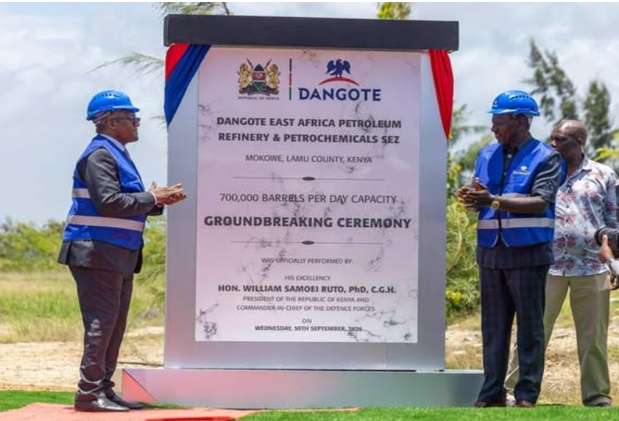



A Kenyan court lifted an order that had halted plans by Aliko Dangote, Africa’s richest person, to build a replica of his 700,000 barrel-a-day Nigerian oil refinery in the Lamu archipelago.
The applicants in the case opposing the construction of the $16 billion plant cited the wrong land parcel in their petition and had been granted leave to correct it, High Court Judge Jane Onyango said in a ruling handed down in the coastal town of Malindi on Wednesday.
The amended suit will now be heard on Nov. 24, enabling more parties to join. About 700 additional Kenyans have indicated that they want to be part of the petition against the facility, their lawyer George Wakahiu told the court.
The original case was filed by a group of 133 petitioners, who complained that they had been deprived of their property rights. They also alleged that Dangote hadn’t shown the planned refinery would be compliant with Kenya’s environmental code and that the public wasn’t consulted about it.
Kenyan laws require “a mandatory environmental impact assessment be done before the implementation of any major project” as well as public participation, the applicants said in their court filings. Lamu is designated a Unesco World Heritage site.
The refinery is part of a multibillion-dollar infrastructure development plan known as the Lamu Port-South Sudan-Ethiopia transport corridor that includes railways, pipelines, a power plant, roads and airports. Its construction would reduce the region’s reliance on oil from the Middle East — a need that’s becoming increasingly pressing since the Iran war erupted, disrupting production and supply chains.
Dangote has said the new plant should be ready for commissioning in 2030 and intends listing shares in the venture on the Nairobi bourse. He has offered Eastern Africa nations a 30% equity stake in the project, with Kenya and Rwanda saying they are ready to invest.
A new eight berth-port will be built in Lamu to facilitate the refinery, according to Kenyan Treasury Secretary John Mbadi. Pipelines will also be constructed to bring crude to the plant from fields in Kenya, Ethiopia and South Sudan.
During a groundbreaking ceremony last month, Dangote said legal challenges to the plant won’t delay its construction.
 Follow the MoneyCentral Nigeria channel on WhatsApp: Click here!