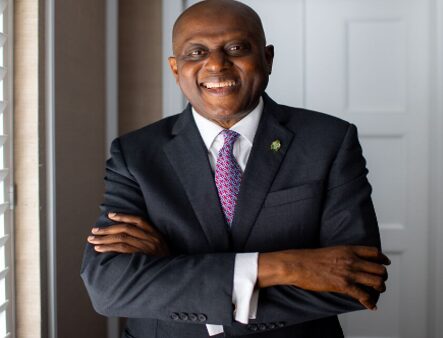



Economists are divided over whether Nigeria’s policymakers will cut borrowing costs or stand pat at their final meeting before elections, as one of the world’s highest real interest rates gives them room to ease, while a weakening currency threatens to reignite inflation.
Of the eight economists surveyed by Bloomberg, five see Governor Olayemi Cardoso retaining the key rate at 23% when he delivers the decision at around 2 p.m. Tuesday in Abuja, the capital, and the rest anticipate another cut.
The monetary policy committee unexpectedly lowered borrowing costs by 350 basis points at its previous meeting in September, but maintained a tight stance with the spread between the benchmark rate and inflation at almost 9 percentage points.
“We do not expect the Central Bank of Nigeria to cut rates in November,” said Tatonga Rusike, chief economist for sub-Saharan Africa at Bank of America. “Following the recent recalibration, we think the central bank will pause and wait for further evidence that disinflation is firmly established before resuming rate cuts next year.”
Annual inflation slowed to 14.1% in October from 14.6% a month earlier but could face pressure from recent currency depreciation.
The naira has weakened almost 4% against the dollar since the MPC last met, pressured by a stronger greenback as Federal Reserve officials signal further rate hikes. Demand for dollars has also increased ahead of the festive season and due to election-related spending.
The MPC may also be reluctant to cut just two months after the previous reduction and weeks before January’s presidential election, as doing so could “invite questions over the CBN’s independence, particularly as the cost of living moves to the center of the campaign,” Deutsche Bank AG economists Viola Fur and Danelee Masia said in a note.
President Bola Tinubu’s rivals, Atiku Abubakar and Peter Obi, are campaigning on restoring fuel subsidies and have made the high cost of living a key part of their pitch to voters battered by double-digit inflation.
Others analysts, including Societe Generale’s Gergely Urmossy and Bloomberg Economics’ Yvonne Mhango, foresee a half percentage point reduction as inflation continues to cool.
October’s inflation data “opened the door further to continue the rate-cutting cycle,” said Urmossy. The central bank’s “inflation expectations survey suggests that there is scope for further monetary easing without de-anchoring domestic inflation expectations,” he said.
Mhango sees a supportive harvest season easing “food-price pressures, giving disinflation another push.”
 Follow the MoneyCentral Nigeria channel on WhatsApp: Click here!