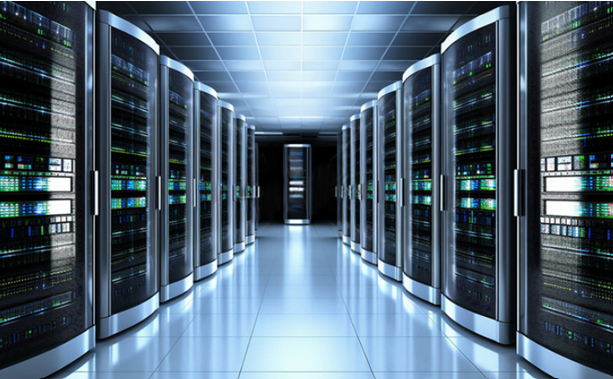



Nigeria’s data-center market has the scale and digital demand to become a bigger African hub, but chronic grid instability and costly self-generation may prevent the country from converting interest in artificial intelligence infrastructure into operating capacity.
Nigeria has about 197 megawatts of data-center capacity, according to S&P Global Ratings, placing it below Saudi Arabia’s 435 MW and far behind China’s roughly 40 gigawatts. Yet its large population, growing digital economy, local-data requirements and role as a West African connectivity hub create a strong foundation for expansion.
The obstacle is power. S&P in a September 04 report, classifies Nigeria’s power availability as “very low” for data-center development, citing heavy reliance on self-generation and backup power, limited renewable-energy transmission and chronic grid instability.
The consequence is higher operating costs, lower sustainability credentials and a greater risk that capacity announcements will not translate into live facilities.
A market with demand
Nigeria is one of the larger digital markets in Africa. A young population, deep mobile-phone adoption, expanding fintech activity, e-commerce, media streaming and enterprise cloud migration all support demand for local computing and storage.
Data sovereignty is also a catalyst. S&P points to the Central Bank of Nigeria’s data-localization and payment-system frameworks, alongside pioneer-status tax holidays and capital allowances, as measures that support local infrastructure investment
The market’s potential lies in more than cloud storage. It includes:
-
Banking, payments and fintech workloads that require high availability and local processing.
-
Telecoms, content-delivery networks and streaming infrastructure.
-
Government and enterprise cloud migration.
-
AI inference, cybersecurity, analytics and business-process platforms.
-
Regional service delivery to West Africa, potentially anchored in Lagos.
But Nigeria’s current market readiness is uneven. S&P ranks the country low on AI regulatory conditions, low on recorded deal activity and very low on power availability, even as it ranks water resilience as high.
Power as the binding constraint
A data center cannot operate like an ordinary commercial building. It needs uninterrupted electricity, redundant supply, robust transmission, cooling and backup systems. In Nigeria, that often means captive gas-fired generation, diesel generators, uninterruptible power supplies and expensive energy-management systems.
S&P says this dependence on self-generation and backup power forces up operating costs and slows decarbonization. In a global market increasingly shaped by hyperscalers’ renewable-energy targets, that can make Nigeria less competitive against countries with stronger grid reliability, renewable procurement mechanisms and deeper capital markets.
Nigeria versus peers
The emerging-market opportunity is real.
Emerging economies already account for 35% of global data-center capacity, and their planned or under-construction pipeline is nearly twice the size of existing capacity. But S&P expects conversion to be uneven, favoring markets with stable policy, reliable electricity, access to capital and sustainable water systems.
| Market | Data-center positioning | Main advantage | Main constraint |
|---|---|---|---|
| China | About 40 GW installed capacity | Scale, policy and capital | Water stress and geographic distance from demand hubs |
| India | Pipeline about 2.7x current capacity | Large demand, capital inflows, state incentives | Transmission strain and water scarcity |
| Malaysia | Major Asia hub | Strong regulation, capital and water availability | Power limits and tighter sustainability rules |
| UAE | Rapid sovereign-backed expansion | Capital, policy coordination and solar deployment | Extreme heat and water scarcity |
| Saudi Arabia | 435 MW installed capacity | Sovereign funding and planned renewable infrastructure | Cooling and water constraints |
| South Africa | Africa’s leading established market | Demand and capital-market depth | Grid reliability and water stress |
| Nigeria | 197 MW installed capacity | Large digital market, connectivity, water availability | Very low power availability and costly self-generation |
Source: S&P Global Ratings
Nigeria’s relative advantage is demand. Its relative weakness is the cost and reliability of supplying every megawatt of that demand.
This creates an opportunity for operators that can secure dedicated power, including embedded gas generation, direct gas supply, solar-plus-storage where technically viable and bilateral power arrangements.
It also gives infrastructure investors a potential role in financing power systems alongside data-center campuses rather than treating electricity as a utility-service issue outside the project boundary.
Water is less acute
Nigeria is better positioned than several emerging-market rivals on water availability. S&P categorizes its water resilience as high because of tropical rainfall and extensive river systems, with lower hydrological stress in coastal areas such as Lagos.
That does not eliminate water risk. The report notes the country’s dependence on unregulated groundwater and the high cost of private water trucking and treatment. In Lagos, rapid urbanization, poor water infrastructure and localized pollution can make access to cooling-grade water more complicated than aggregate rainfall figures suggest.
For developers, the practical solution is likely to combine efficient cooling design, water treatment, recycling, closed-loop systems and site-specific water-security assessments.
Policy opportunity
Nigeria has some ingredients needed to attract investment, including tax incentives and data-localization policy. But S&P says the country lacks a single-window or fast-track approvals process, a gap that can lengthen construction timelines and increase financing risk.
The policy challenge is to avoid importing a problem that developed markets are already confronting: public backlash against data centers that consume scarce electricity, raise power costs or compete with households and manufacturers for water and land.
Investment implications
For Nigeria, the most investable data-center model may not initially be the ultra-large, grid-dependent campus seen in Virginia, Dublin or Singapore. It may be a hybrid model built around:
-
Carrier-neutral facilities in Lagos and other connectivity hubs.
-
Onsite or dedicated gas generation.
-
Solar and battery systems for partial load support.
-
Redundant fiber infrastructure and submarine-cable connectivity.
-
Financial-services, telecoms and enterprise customers that value local uptime more than the lowest possible global cloud price.
-
Modular campuses that scale with power availability.
S&P says this model can be expensive, but it may be more viable than waiting for nationwide grid reliability to improve.
 Follow the MoneyCentral Nigeria channel on WhatsApp: Click here!