


…Building the systems that turn potential into prosperity
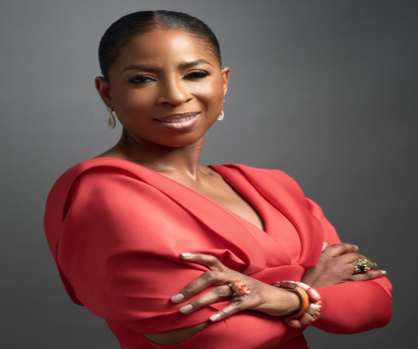
BY DUPE OLUSOLA
Part I: The Foundation Is Trust
Every decade, the world rediscovers Africa.
First it was oil. Then “Africa Rising.” Then mobile phones. Then fintech. Then Nollywood and Afrobeats: storytellers carrying the continent’s culture onto the world’s stages. Today it is critical minerals, artificial intelligence, and the world’s youngest population.
By now, most of us have heard the statistic: by 2050, one in four people on the planet will be African.
It is an extraordinary projection, but demographics are not destiny.
Population is possibility. What determines whether that possibility becomes prosperity is the system built around it.
Each wave arrives with the same bold predictions, and each one runs into the same quiet question: Why has a continent with so much potential struggled to convert it into prosperity at scale?
The answers are usually different. Yet they often lead us back to the same place.
For decades, the debate has centred on capital. Governments have searched for it. Investors have priced it. Development institutions have mobilised it. Yet perhaps the more important question has always been different.
Africa’s greatest shortage is not capital itself. It is the institutional trust that allows capital to flow with confidence.
Countries do not become prosperous because they discover resources. They become prosperous because they build institutions that allow people, capital, and opportunity to trust one another.
We often talk about building roads, power plants, and ports. But before we build physical infrastructure, we have to build institutional infrastructure.
Trust is infrastructure
Not the kind made of concrete or steel, but the kind every successful economy quietly depends on.
It is the invisible bridge between savers and investors, entrepreneurs and banks, pension funds and power plants, today’s policies and tomorrow’s prosperity.
You cannot photograph trust. Yet without it, every visible piece of infrastructure becomes harder to finance, more expensive to build, and more difficult to sustain.
Trust is one of the few assets that compounds. Every honoured contract, every predictable policy, and every functioning institution reduces uncertainty and makes the next investment easier than the last.
Across every sector I have worked in, from banking and private equity to hospitality and energy, I have come to the same conclusion: systems outperform moments. Institutions outperform individuals. Trust outlasts both.
Every great building begins with a foundation. In the months ahead, we’ll explore the doorway that brings Africa’s invisible businesses into the formal economy. We’ll examine the beams that turn savings into long-term investment. We’ll look at the platform of reliable energy, the wiring of fiscal trust, and the load-bearing walls of institutions that outlive political cycles.
But before any of those can stand, we need the foundation.
Trust
Trust is not built through declarations. It is built through consistent experience. Through systems that work so reliably that people stop questioning whether they will work tomorrow. Africa has already shown this is possible: an entire generation adopted mobile money not because they were told to trust it, but because it worked, every day, until trust simply became the default. Sub-Saharan Africa now accounts for more than half of the world’s mobile money accounts, moving over a trillion dollars a year, a system built not by mandate, but by millions of positive experiences repeated over time. That is the pattern the rest of this architecture has to follow, in banking, in energy, in government, in every system where someone is being asked to commit today for a return that only arrives later.
Where trust is thin, capital stays short-term and expensive. Where trust is deliberately engineered into institutions, capital lengthens, and everything else becomes possible to finance.
For too long, Africa has been described as the continent of potential.
Potential is not a strategy
Population is possibility. Productivity is what transforms possibility into prosperity.
Resources are not wealth
Capital is not development
None of these matter unless they are connected by institutions people trust. That is the architecture Africa must build. Not because trust is idealistic, but because trust is productive.
It lowers the cost of capital. It attracts investment. It rewards entrepreneurship. It survives elections. It compounds across generations.
We often ask what Africa’s next competitive advantage will be. I believe it will not be something we discover. It will be something we deliberately build.
Africa’s future will not be built by hope. It will be built by design.
One trusted institution. One connected system. One generation at a time.
Architecture is never built in a day. But every enduring structure begins with a foundation.
The future is not something we inherit. It is something we build.
If architecture is built by many hands, then every one of us has a role to play. Here is where we begin.
The First Build
Governments
- Create the conditions for trust to flourish.
- Build institutions that outlast political cycles.
- Digitise and simplify participation in the formal economy.
- Create stable, predictable policy environments.
Investors
- Reward systems that strengthen confidence, not just projects that generate returns.
- Look beyond funding projects to strengthening the systems that make projects investable.
- Support local capital-market development alongside infrastructure.
- Partner with domestic institutions to build long-term confidence.
Business Leaders
- Build organisations people can rely on.
- Formalise operations and embrace transparent governance.
- Build businesses that generate trust as well as profits.
- Think beyond quarterly results to institutional legacy.
Individuals
- Practise the habits that make trust possible.
- Keep your commitments, especially the small ones no one is watching.
- Say what you will do. Do what you say. Trust is built in the space between the two.
- Choose to build trust wherever you are, at home, at work, and in your community, because strong institutions are built by people with strong habits.
The Architecture of African Growth is a continuing series exploring how Africa can build the systems that transform potential into prosperity.
Next in The Architecture of African Growth: The Doorway, and what it actually takes to make Africa’s invisible businesses visible to the capital already waiting to find them.
ABOUT THE AUTHOR
Dupe Olusola is the Founder & CEO of DOVA Capital, investing in energy and infrastructure across African markets. A former CEO of Transcorp Hotels, she is a Harvard ALI Fellow and MIT Kuo Sharper Advisor, and Harvard University alumna.
About this series
The Architecture of African Growth explores the systems that transform potential into prosperity. Each essay examines one building block, from trust and formalisation to capital, energy, and institutions, and argues that Africa’s future will not be determined by what it has. It will be determined by how well it connects what it has.
 Follow the MoneyCentral Nigeria channel on WhatsApp: Click here!