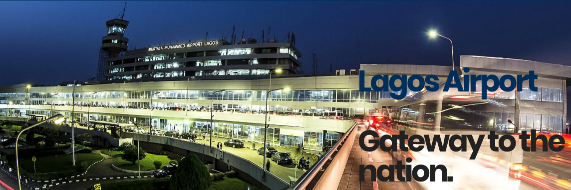



Air passengers arriving at major aviation hubs across Nigeria, including the Nnamdi Azikiwe International Airport (NAIA) in Abuja and the Murtala Muhammed Airport (MMA) in Lagos, are grappling with a sharp surge in transportation costs, severe vehicle shortages, and extended delays.
The disruption follows the strict enforcement of new regulatory protocols by the Federal Airports Authority of Nigeria (FAAN), which has effectively suspended popular e-hailing giants like Uber and Bolt from picking up passengers directly within airport terminal premises.
The operational standoff stems from an internal directive issued by FAAN, signed by U.R. Liman, General Manager of Commercial Services. The directive ordered an immediate operational freeze on unregularized e-hailing services pending the finalization and execution of formal commercial license agreements.
While FAAN later clarified that it has not placed a permanent blanket ban on ride-hailing platforms, enforcement has intensified significantly. Task force personnel deployed across major terminals have clamped down on unauthorized pickups, enforcing steep penalties, including a ₦40,000 fine for e-hailing drivers caught soliciting or picking up passengers within restricted zones.
In addition to licensing requirements, FAAN has rolled out stricter compliance mandates for car-hire operators, requiring minimum vehicle model years (such as 2012 or 2015 depending on the terminal) and mandatory onboarding onto a designated digital booking and rank management system.
Airport authorities maintain that these measures are vital to improve security, passenger identification, and revenue collection.
“Operators cannot use our space to pick up passengers without contributing to airport revenue. We want to fully digitise the process to ensure proper revenue capture,” a regulatory source explained.
Passengers Bear the Cost: Fares Spike by Over 50%
The restrictions have created an immediate bottleneck, leaving travelers stranded or forced to navigate a fragmented two-tier transport system. With e-hailing vehicles barred from the terminals, traditional airport car-hire operators have seized a virtual monopoly, pushing fares up by more than 50 percent.
Commuters traveling from the airport into city centers report astronomical price differences. Trips that previously cost around ₦15,000 to ₦20,000 via e-hailing apps now command upwards of ₦35,000 to ₦40,000 when using authorized airport taxis.
For distant destinations within commercial hubs like Lagos, fares have reportedly surged past ₦50,000.
Frequent flyers have expressed frustration over the sudden policy shift. Francis Tochukwu, a traveler navigating both Abuja and Lagos terminals, noted that the restrictions have severely limited safe and affordable commuting options.
“I booked a ride, but the driver asked me to meet at a designated parking area outside the terminal,” Tochukwu explained. “Drivers are forced to increase prices because of the risks of vehicle impoundment, parking charges, and security-related enforcement costs inside the airport premises.”
Industry Pushback and the Path Forward
Aviation experts and stakeholders have criticized the abrupt execution of the policy, arguing that while security and standardization are necessary, passenger convenience and market competition must remain central. Analysts point out that imposing heavy compliance burdens without a smooth transition period disproportionately harms everyday commuters already struggling with high travel expenses.
Meanwhile, FAAN has reiterated that discussions with ride-hailing operators are actively ongoing to establish a mutually acceptable framework. Both parties aim to resolve security verification, data integration, and operational logistics so that digital transport services can resume seamlessly without compromising terminal safety.
Until a formal resolution is reached, passengers arriving at Nigerian airports are advised to factor in longer waiting times, higher transit budgets, or alternative pick-up arrangements outside designated terminal zones.