| Area |
Implication |
| Energy security |
Closer cooperation on supply resilience and market monitoring |
| Policy support |
More technical collaboration on reforms and planning |
| Africa engagement |
Stronger IEA role in sub-Saharan Africa |
| Clean energy |
Support for solar, electricity access and clean cooking expansion |
Source: International Energy Agency
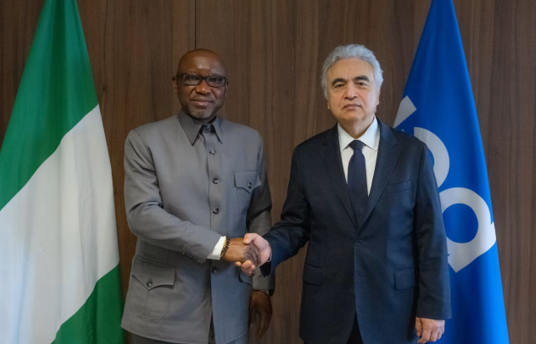
IEA Executive Director Fatih Birol called Nigeria’s admission “a milestone for global energy governance,” saying the country’s membership strengthens the agency’s reach into a major energy-producing and consuming market. Nigeria’s Minister of State for Petroleum Resources (Gas), Ekperikpe Ekpo, said the move was an honor and urged African governments to engage more closely with the IEA to help achieve universal energy access and industrialization.
Why Nigeria Matters
Nigeria’s role in global energy markets has grown as its refining sector expands. During recent market disruptions, higher fuel exports from Nigeria helped support resilience in African and international fuel markets, while the country has also become one of the fastest-growing markets for decentralized solar solutions.
That combination makes Nigeria a useful partner for the IEA at a time when the agency is broadening its footprint beyond its traditional OECD base. The association program, created in 2015, now includes 13 other countries, and the IEA says its family now accounts for more than 80% of global energy demand, up from 40% in 2015.
Policy and Market Context
Nigeria and the IEA have collaborated since 2014, including on methane reduction. In September 2025, the IEA, Nigeria’s petroleum ministry and the African Energy Commission convened a regional roundtable in Abuja to push methane pledges into action across Africa.
The new relationship gives Nigeria more access to policy dialogue and technical support as it tries to expand electricity access, improve fuel security and accelerate industrialization. For the IEA, it adds a major African energy producer and importer to a network that increasingly reflects the world’s shifting demand center.
The development also signals that Nigeria wants a larger voice in international energy policy at a time when its domestic reforms, refining expansion and renewable push are reshaping its energy profile.
Get More of our proprietary news and analysis as MoneyCentral is now on WhatsApp Channels  Follow the MoneyCentral Nigeria channel on WhatsApp: Click here!