


According to the legendary investor Warren Buffett, free cash flow—the cash remaining after a company has covered expenses, interest, taxes, and long-term investments—is the most crucial valuation metric.
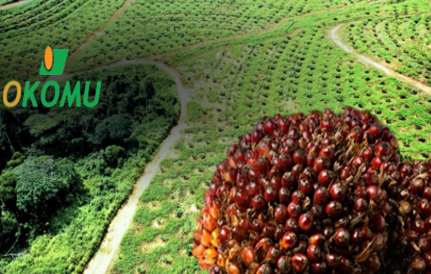
And it is not out of place to mention Okomu Oil as one of the best stocks in terms of cash generation, as the palm oil producer is sitting on a pile of cash while its efficient liquidity management is going to lift its share price.
The company adjusted free cash flow surged by 122.30 percent to N80.62 billion in the first six months of 2025, from N36.26 billion as at September 2024. Of course, Okomu is efficient in converting sales to cash as free cash flow to sales increased to 46.34 percent in September 2025 from 34.48 percent the previous year.
Net operating cash flow spiked by 149.5 percent year on year (yoy) to N76.26 billion, driven by improved receivables collection, faster inventory turnover and sustained discipline in supplier payments.
It is important to note that Okomu’s high free cash flow yield, favorable future growth prospects, and healthy balance sheet earns it buy ratings from investment houses.
For instance, analysts at Chapel Hill Denham in a recent note to clients have maintained their BUY ratings on the company with a 12-month target price (TP) of N1,291.92. The stock currently trades at an EV/EBITDA multiple of 7.9x, above its five- year average of 5.4x.
Analysts at Chapel Hill Denham attribute Okomu’s consistent earnings growth to sustained domestic demand and firm local pricing in the palm oil segment.
“Also supportive was the 12.5 percent year on year (yoy) increase in the average international palm oil price during Q3-25, which stood at US$1,011.73 per metric tonne, and helped to anchor local market pricing,’’ said analysts at Chapel Hill Denham.
It is noteworthy that there has been a reduction in export sales due to appreciation in the currency (Naira) on the back of improved liquidity in the foreign exchange market.
The relative stability of the USD/NGN, with the USD/NGN rate averaging N1,520.97/USD, representing a 4.8 percent yoy appreciation, likely weighed on export revenue, while the average rubber price declined by 4.0% yoy to US$1.68 per kg in Q3-25, according to analysts at Chapel Hill Denham.
The company’s working capital to sales ratio of 1.78 means it can pay off its total debt with only its working capital.
An analysis of the third quarter financial statement of the oil palm producer shows revenue spiked by 67.30 percent to N173.91 billion in the period under review from N103.49 billion the previous year.
Earnings before, interest, taxation, depreciation, and amortization (EBITDA) rose by 101.70 percent to N90.29 billion in September 2025 from N44.77 billion as at September 2024.
Profit after tax (PAT) surged by 112.90 percent to N60.33 billion in the period under review from N28.33 billion the previous year.
EBITDA margin expanded by an impressive 8.8ppts yoy to 51.9 percent in the third quarter (9M-25), underscoring improved production efficiency and pricing resilience.
 Follow the MoneyCentral Nigeria channel on WhatsApp: Click here!