
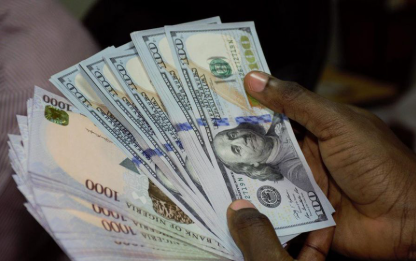



Central Bank of Nigeria (CBN) foreign exchange (FX) market reforms have fundamentally altered domestic capital market liquidity, lifting average daily FX turnover to over $500.0 million.
This is a fivefold increase compared to pre-2024 levels of around $100.0 million daily, according to data from investment firm CardinalStone Partners.
The liquidity rebound, paired with FX clearing mechanisms, has driven historic foreign portfolio investment (FPI) into Nigerian sovereign debt.
After reaching $4.90 billion in 2025, foreign inflows into the bond market touched $3.20 billion in Q1 2026 alone.
Following JP Morgan’s Frontier Index inclusion announcement, Nigeria’s 17.1% nominal bond yield now positions the country as the second-highest carry trade yield in the frontier index universe, trailing only Egypt (24.1%).
Strategic Rationale & Market Impact
-
Carry Trade Attractiveness: Nigeria’s 17.1% nominal yield provides a substantial real yield buffer against inflation and FX depreciation. With the FX market trading near ₦1,290/$ and gross external reserves at $54.5 billion, international macro funds are positioning to capture high real returns.
-
JP Morgan Benchmark Inflows: Inclusion in JP Morgan’s dedicated local-currency frontier debt index provides an institutional mechanism for passive global funds to allocate capital directly to Nigerian Treasury Bills and Federal Government of Nigeria (FGN) bonds.
-
Secondary Market Yield Compression: Strong foreign investor demand is expected to accelerate secondary market yield compression across the long end of the curve, supporting the Debt Management Office’s (DMO) strategy to reduce sovereign domestic borrowing costs.
“We view nominal yields as likely to drift gradually toward the long-run average of c.14.0% over the next two years, as we think the CBN may deliver a large rate cut of 400- 600bps in 2027/2028, reflecting sustained moderation in inflation. Even at a 14.0% yield, Nigeria’s bond will still be more attractive than most counterparts in the index,” CardinalStone analysts said in a September 16, note to clients.
 Follow the MoneyCentral Nigeria channel on WhatsApp: Click here!
 foreign exchange (FX) market reforms have lifted average daily FX turnover to over $500.0 million.)