
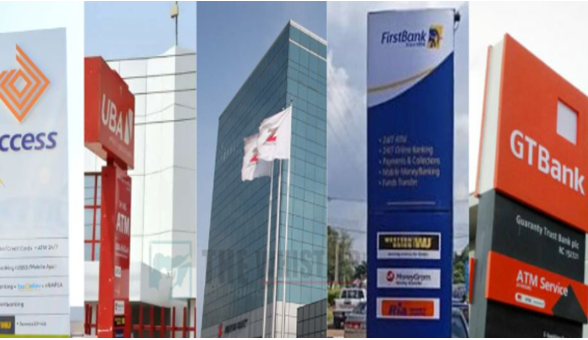



A granular analysis of Tier-One banks nine-months (9M) 2025 financial statements reveals a striking divergence in the “quality” of earnings among Nigeria’s banking giants.
While Zenith Bank and Access Holdings reported high headline profits, they recorded the lowest cash earnings retained among the “Fantastic Five” (First HoldCo, UBA, GTCO, Access, Zenith) group.
The discrepancy points to a heavy reliance on non-cash items—primarily unrealized foreign exchange (FX) revaluation gains and accrued interest income—rather than liquid, “cold-hard-cash” inflows.
The Cash vs. Paper Profit Gap
While the market cheered the trillion-naira profit benchmarks, the cash earnings analysis tell a more nuanced story.
Data from Renaissance Capital Africa shows that the tier-one bank cash earnings retained as at 9M, 2025 were: Access Holdings N372 billion, GTCO N483.9 billion, Zenith Bank N484.6 billon, First HoldCo N780 billion and UBA N983 billion.
Zenith Bank’s cash earnings, which was negative in FY 2024, only turned positive in Half Year 2025 and 9M 2025.
-
Non-Cash Dominance: For Zenith and Access, a significant portion of Other Income is attributed to the paper appreciation of FX-denominated assets as well as fair value change in trading bonds and derivatives.
-
The Comparison: In contrast, peers like First HoldCo and UBA demonstrated a higher “Cash Conversion Ratio,” with a greater percentage of their reported profits backed by actual net operating cash flows.
-
Regulatory Headwinds: The Central Bank of Nigeria (CBN) has previously warned banks against distributing unrealized FX gains as dividends, a policy that puts pressure on institutions with low cash-to-earnings ratios as they navigate the 2026 recapitalization exercise.
Strategic Drivers: Why the Lag?
Analysts point to the specific business models of both institutions as the primary drivers of this trend:
-
Access Holdings’ Expansion Binge: Access has aggressively deployed cash into pan-African and international acquisitions. While these assets boost the balance sheet and headline “paper” value, they often have a long “gestation period” before they contribute significant cash dividends back to the parent HoldCo.
-
Zenith’s Risk-Averse Liquidity: Zenith’s traditional focus on high-quality corporate lending often involves structured repayments that accrue interest over time, leading to high accounting profits that don’t immediately manifest as cash on hand.
Implications for 2026
This earnings mix is particularly critical as the April 2026 deadline for new capital requirements approaches:
-
Dividend Restraint: Banks with lower cash earnings may be forced to retain more of their liquid capital, leading to more “conservative” dividend payouts than retail shareholders expect.
-
Investor Scrutiny: Sophisticated institutional investors are shifting their focus from “Price-to-Earnings” (P/E) ratios to “Price-to-Free-Cash-Flow,” favoring banks that can prove their profits are liquid and deployable.
 Follow the MoneyCentral Nigeria channel on WhatsApp: Click here!
 2025 financial statements reveals a striking divergence in the "quality" of earnings)