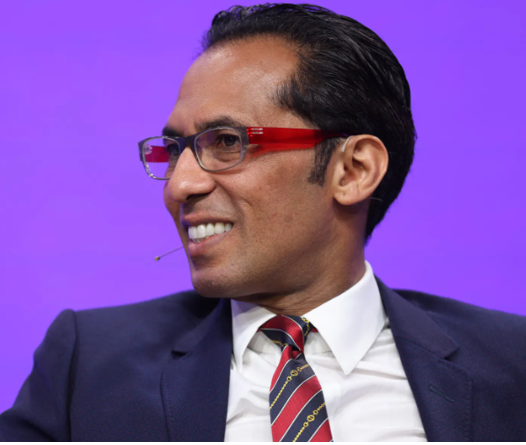



Tanzanian billionaire and MeTL Group head Mohammed Dewji has pledged to inject $100 million into a massive $17 billion crude oil refinery planned for the East African coast of Kenya by Africa’s richest man, Aliko Dangote.
The proposed downstream megaproject represents an aggressive cross-border replication strategy by the Dangote Group, which aims to mirror the operational architecture of its newly scaled 700,000 barrel-per-day facility in Lagos, Nigeria.
When completed, the East African facility will instantly become the second-largest petroleum refinery on the African continent, fundamentally altering fuel distribution dynamics across the East African Community (EAC) bloc.
While Tanzania was initially evaluated as a potential geographic anchor for the mega-refinery, Dangote Group executives confirmed that Lamu, a strategic port town in southeastern Kenya, was ultimately selected.
The group cited overarching “commercial and technical” parameters for the Kenyan site selection, leveraging Lamu’s deep-water port infrastructure to maximize regional crude off-take.
Billionaires Align to Challenge Imported Fuels
Despite expressing a natural bias toward his home market, Dewji indicated that the shift to Kenya would not derail his institutional appetite to back the energy play.
“I would lean more toward Tanzania than in Kenya,” Dewji noted in a recent interview, “but I definitely won’t rule out participation.” The Tanzanian tycoon added that he intends to proactively reach out to Dangote to formalize the $100 million private placement framework.
The prospective alignment of two of Africa’s most prominent industrial billionaires comes at a vital time for the region’s macroeconomic balance sheets. East African economies are highly vulnerable to international refined product pricing volatility and hard-currency bleed due to their heavy reliance on imported gasoline, diesel, and aviation fuel from the Middle East.
By building localized refining capacity, the Dangote-Dewji consortium aims to capture regional market share, substituting imported petroleum products with fuel processed directly from the East African coast.
Ruto Pushes for Immediate Groundbreaking
The project has captured intense political support from Nairobi. Kenyan President William Ruto has aggressively fast-tracked the regulatory and environmental clearance tracks, indicating that construction on the $17 billion facility is expected to begin before the end of the year.
Dangote Group executives report that Wall Street banks, developmental finance institutions, and regional high-net-worth investors have flooded their desks with funding proposals since the Kenyan site was made public.
For international asset managers, the success of Dangote’s second energy gambit will depend heavily on regional crude security—specifically securing consistent feedstock supplies from regional producers like Uganda and South Sudan—while managing the complex multilateral logistics of the Lamu Port-South Sudan-Ethiopia Transport (LAPSSET) corridor.
 Follow the MoneyCentral Nigeria channel on WhatsApp: Click here!