


…Investor alleges regulator judged it on rules that did not yet exist
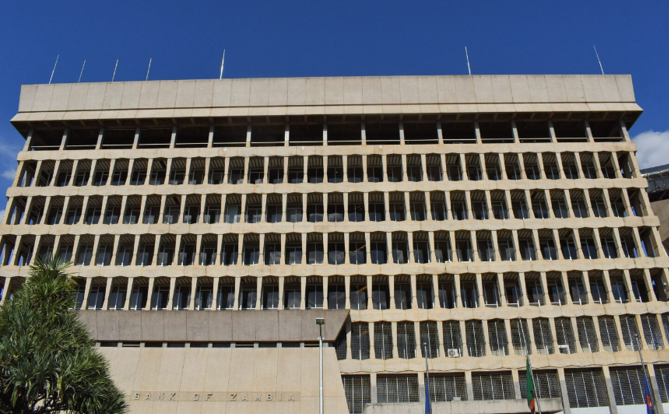
Bank of Nevis International (BONI) is suing Zambia’s central bank for $40 million, alleging the regulator blocked its stake in a listed lender using ownership rules that were not yet law, then seized the bank and left the shares worthless.
BONI bought 24.8% of Investrust Bank on the Lusaka Securities Exchange in 2021 and 2022. That made it the second-largest shareholder after ZCCM-IH, the state-controlled investment group. It then sought recognition from the Bank of Zambia as a significant shareholder, as the law requires.
BONI alleges the central bank assessed it against “fit and proper” requirements that were not formally prescribed until December 2023, more than a year after the assessment began.
BoZ had itself referred to BONI as Investrust’s “new shareholder” in February 2023, before later saying it had no regulatory clearance to be a shareholder and beginning a process to “de-recognise” its holding.
In January 2024 the Bank of Zambia refused to recognize BONI as a shareholder. Three months later it took control of Investrust, citing insolvency. The bank was later liquidated. BONI says it received neither notice nor compensation.
The investor also alleges that the appeals tribunal required by law to hear such challenges was never established. Independent advisers have put its losses at no less than $109.5 million. It is claiming $40 million.
BONI filed for judicial review at Zambia’s High Court in July against the central bank, the finance minister and the attorney general, alleging breaches of the Banking and Financial Services Act.
The court has rejected three attempts by the Bank of Zambia to have the case struck out or to remove itself from the proceedings. Those rulings were procedural. A full hearing is expected next year.
Robert Amsterdam, the lawyer representing BONI, said: “Our client bought nearly a quarter of a listed bank on Zambia’s own stock exchange. The regulator then judged it against rules that did not yet exist, refused to recognize it, and months later the bank was gone. If that can happen to a listed investment, every investor in Zambia should be asking what the rules are worth.”
The case comes as Zambia negotiates a new IMF program and seeks to attract foreign capital after its debt restructuring.
President Hakainde Hichilema has been Zambia’s most effective advocate, repeatedly promoting the country to investors around the world as open for business and seeking to attract international investment. BONI says its case raises serious questions about the capability of the country’s regulatory institutions and whether they are delivering the certainty and protections foreign investors expect.
The Bank of Zambia has said it took control of Investrust under banking law because the lender was insolvent, and that it is conducting the liquidation fairly and lawfully. BONI’s allegations have not been tested in court.
 Follow the MoneyCentral Nigeria channel on WhatsApp: Click here!