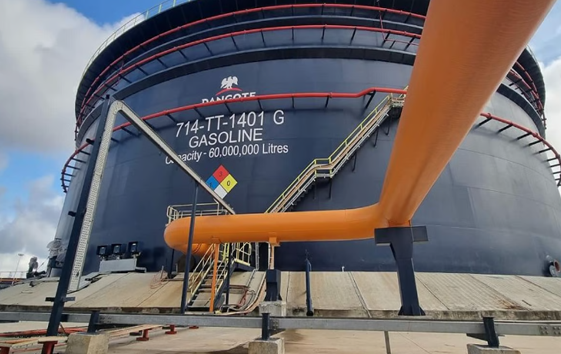



As the U.S.-Israel-Iran conflict paralyzes traditional Middle Eastern supply chains, the Dangote Petroleum Refinery has emerged as the strategic anchor for African energy security.
With the Strait of Hormuz—the transit point for 75% of East and Southern Africa’s fuel—facing unprecedented disruptions, sovereign governments are bypassing global traders to negotiate directly with Lekki.
Aliko Dangote confirmed the shift in a recent interview, noting that the global market has pivoted from price sensitivity to a desperate scramble for availability. “I think the situation will continue for a while,” he warned.
The “Middle East Gap”: Africa’s 75% Vulnerability
The war has exposed a massive structural weakness in African fuel procurement. According to energy consultancy CITAC, the dependency on Middle Eastern refined products is most acute in the East and South.
| Region | Dependence on M.E. Fuel | Primary Risk Factor |
| East & Southern Africa | 75% of total imports | Strait of Hormuz closure/insurance hikes. |
| West Africa | ~40% of total imports | Transitioning to Dangote/Local refining. |
| Global Impact | High | Cooking gas (India), Naphtha (Japan) shortages. |
The Sovereign Inquiries: South Africa, Ghana, and Kenya
A Dangote company executive confirmed that the 650,000 barrel-per-day (bpd) facility is being “flooded” with requests for long-term supply guarantees.
-
South Africa: Sources indicate Pretoria is seeking a 12-month standard contract with Nigeria to hedge against dwindling supplies. South Africa’s own refining capacity has remained constrained, making the Atlantic-to-Indian Ocean route from Lagos a critical lifeline.
-
Ghana & Kenya: Both nations have reached out to secure volumes. For Kenya, the shift is particularly urgent as it traditionally looks East for its fuel; for Ghana, proximity to the Lekki Free Zone offers significant freight savings.
-
The “25% Export” Rule: While 75% of production is statutorily reserved for the Nigerian domestic market (currently meeting 92% of local demand), the remaining 162,500 bpd is now the most contested fuel volume in the Atlantic Basin.
Operational Scaling: Meeting the Export Demand
To meet this sudden surge in continental demand, the refinery is optimizing its product slate:
-
Utilization: Currently operating at approximately 78% capacity, the refinery is expected to ramp up toward 90% by Q3 2026 to maximize its exportable surplus.
-
Jet Fuel & Diesel: As middle distillates face the highest “war premium,” Dangote’s 50ppm (Euro-V) diesel is being prioritized for regional neighbors to replace more expensive, high-sulphur European imports.
-
The “Naira-for-Crude” Factor: By processing domestic crude, the refinery avoids the “dollar-trap” currently hurting other African energy importers, allowing it to offer relatively stable—albeit market-reflective—pricing.
 Follow the MoneyCentral Nigeria channel on WhatsApp: Click here!